Charles Taylor
Building Envelope Engineering

Findings Register

9 findings · Grouped by Roof System · Inspection May 14, 2026
0
S1 Critical
3
S2 Major
5
S3 Moderate
1
S4 Monitor

Modified Bitumen Roof (Installed 2025)

System rating: GOOD. Performing as designed in its first post-installation bi-annual review. The items below are routine maintenance to complete before the June 1, 2026 hurricane season start.
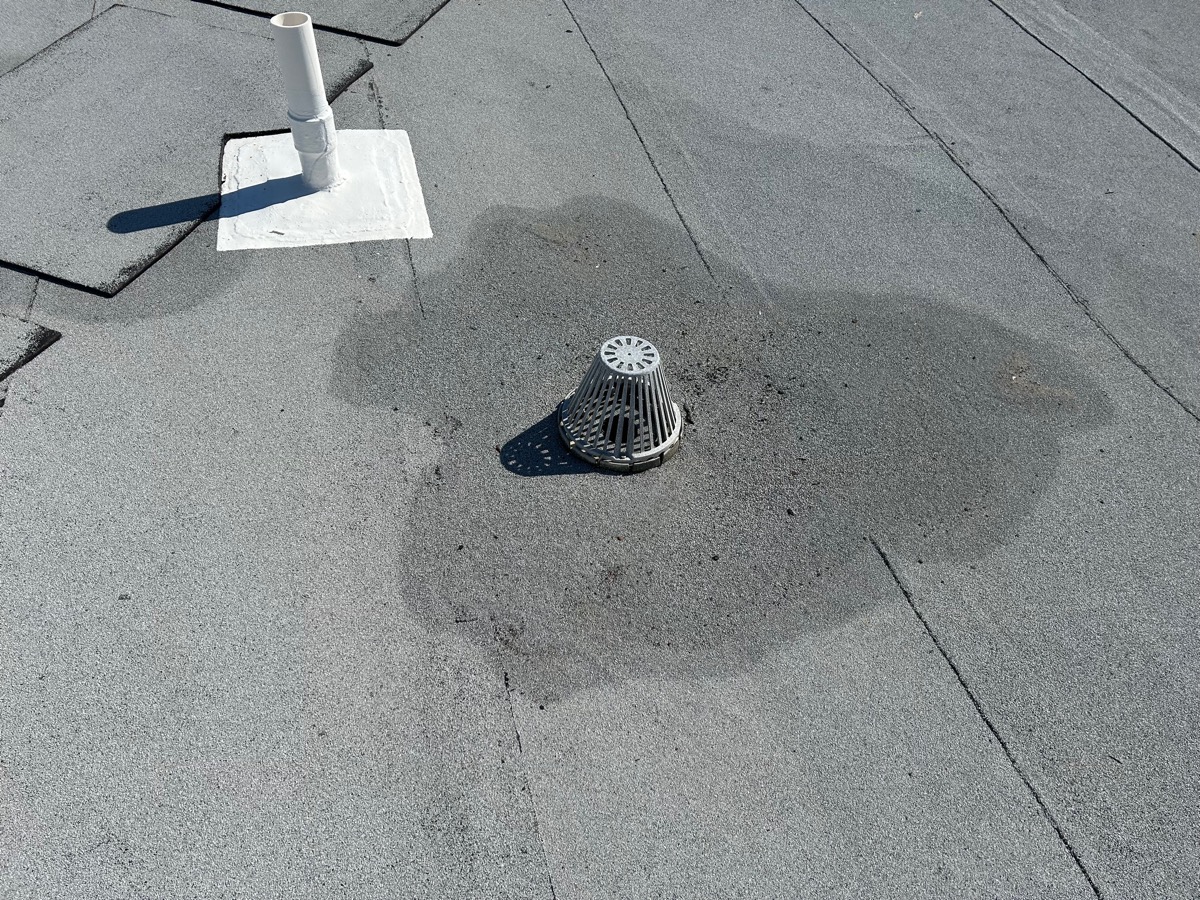
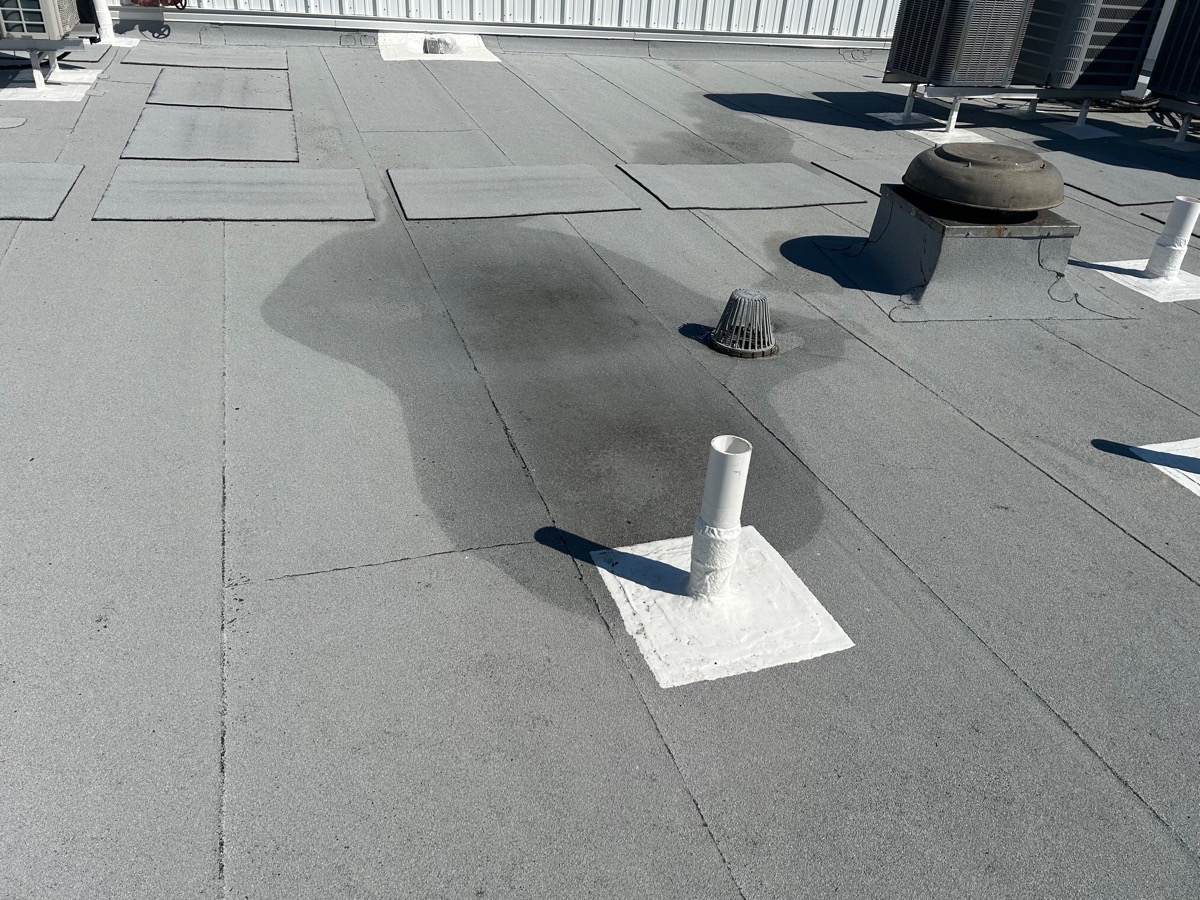
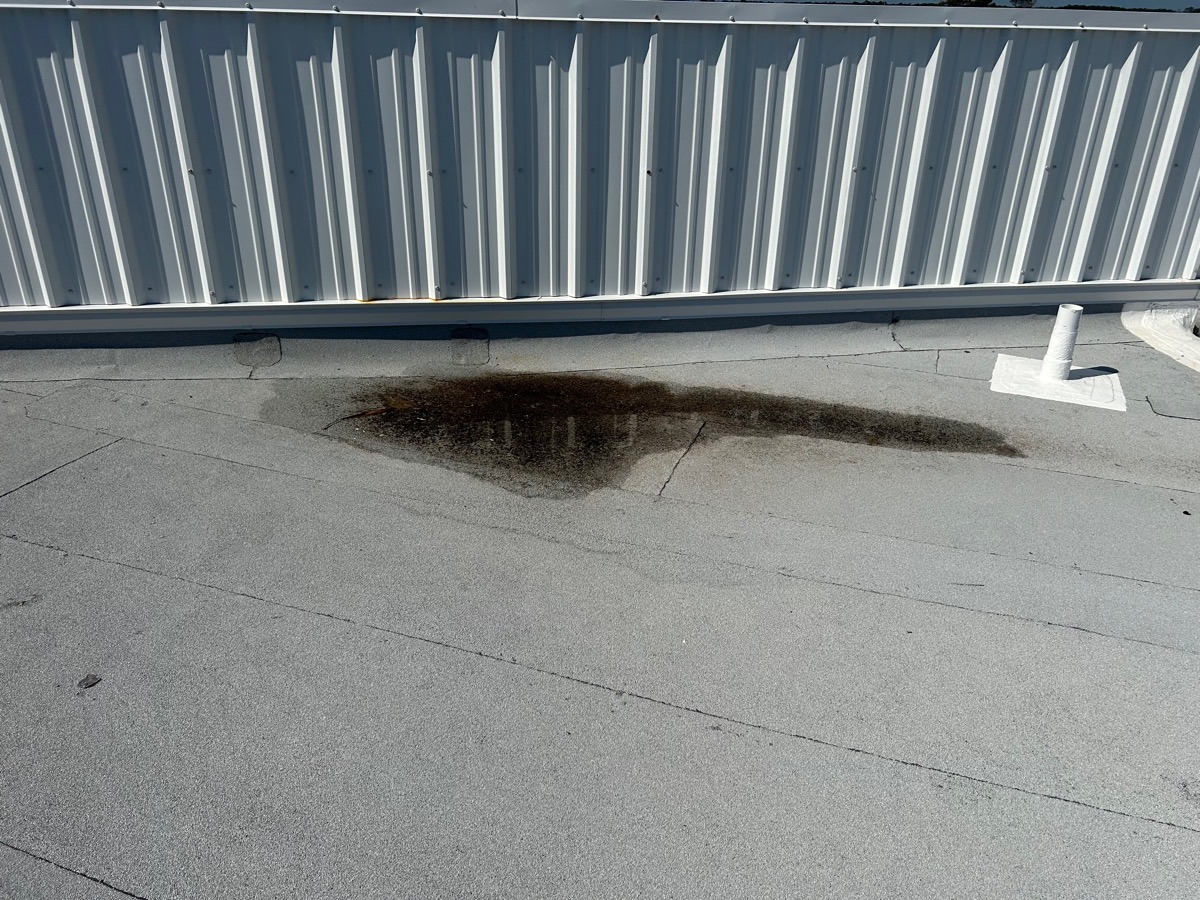
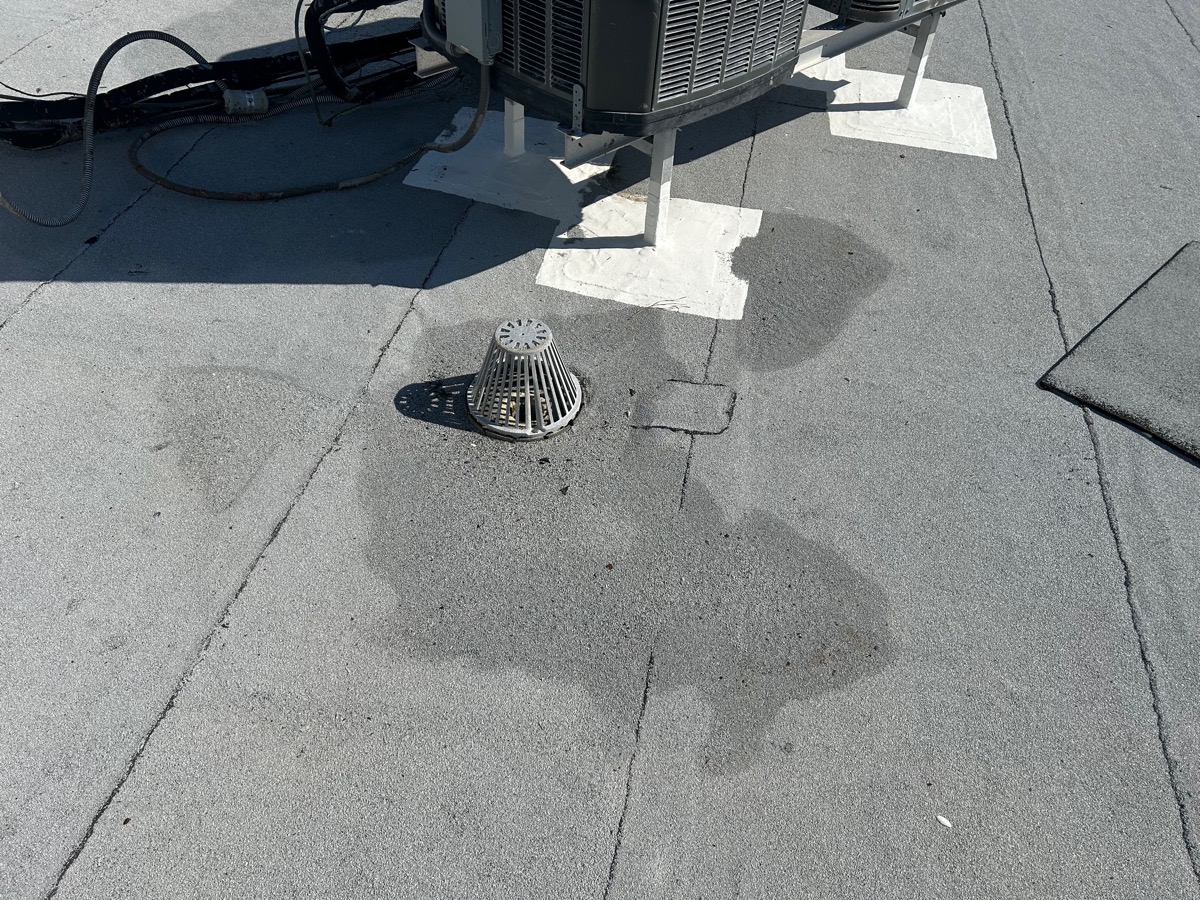
F-1 Ponding water at internal drains and along screen wall base, dissipates within 48 hours
S4 Monitor C-High Area B1-MB / B2-MB

Component: Drainage, Internal Drains and Screen Wall Base

Description: Ring-pattern wet staining was observed around several internal roof drain bowls and along low points at the metal screen wall base. Field inspection confirmed that standing water dissipates within 48 hours of a rain event, which is within the NRCA threshold for low-slope membrane systems. The pattern is consistent with the designed slope geometry directing water toward drains and overflow scuppers and does not represent a system deficiency.

Likely Cause: As-designed drainage pattern. The white granulated surface and salt-air environment together leave a visible mineral ring pattern around drain bowls even when ponding clears within the 48-hour threshold.

Recommended Action: Monitor at each bi-annual inspection. Re-confirm dissipation timing after the first significant rain event of each season. No corrective work required at this time.

Action Window: Monitor at next bi-annual (post-hurricane season, November-December 2026).

Reference Standard: NRCA 48-hour ponding threshold for low-slope membrane.
P-010
P-017
P-041
P-050
P-057
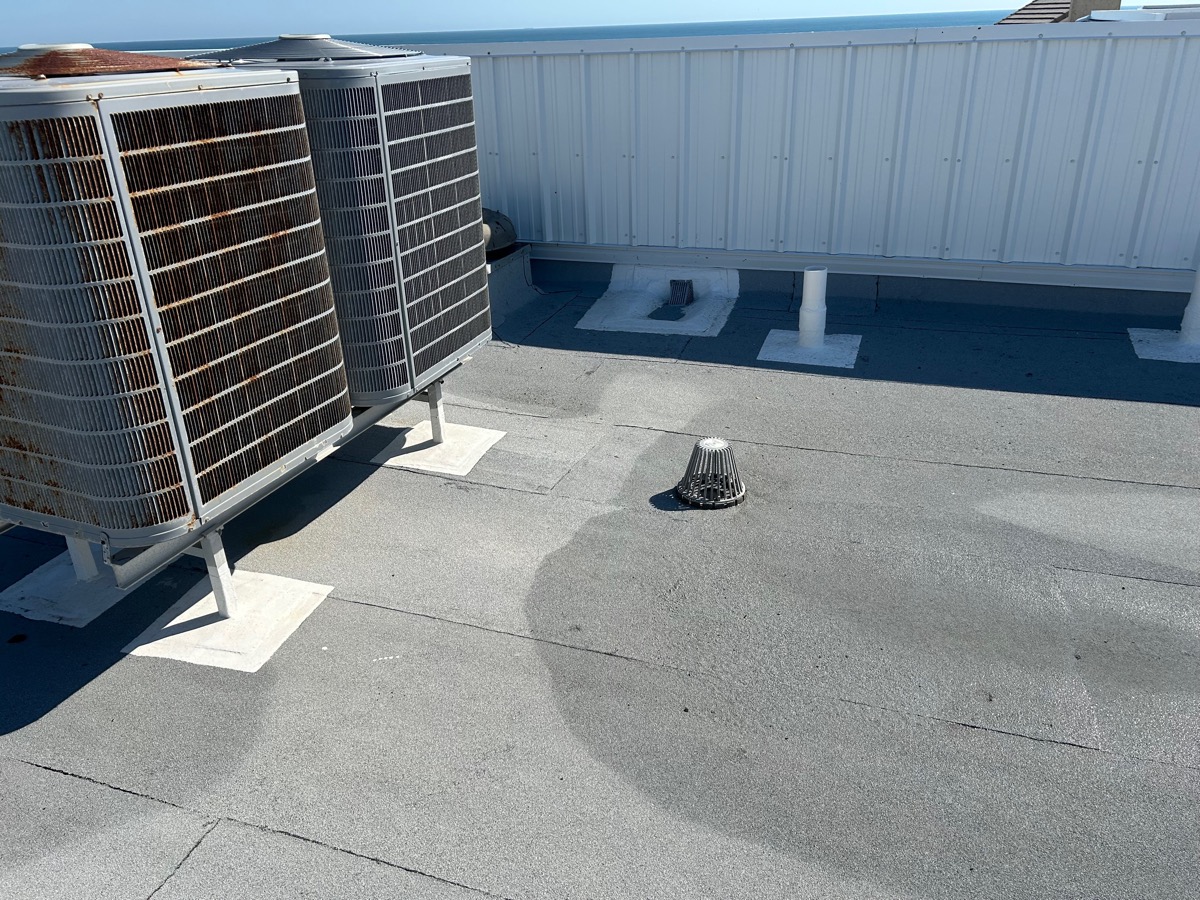
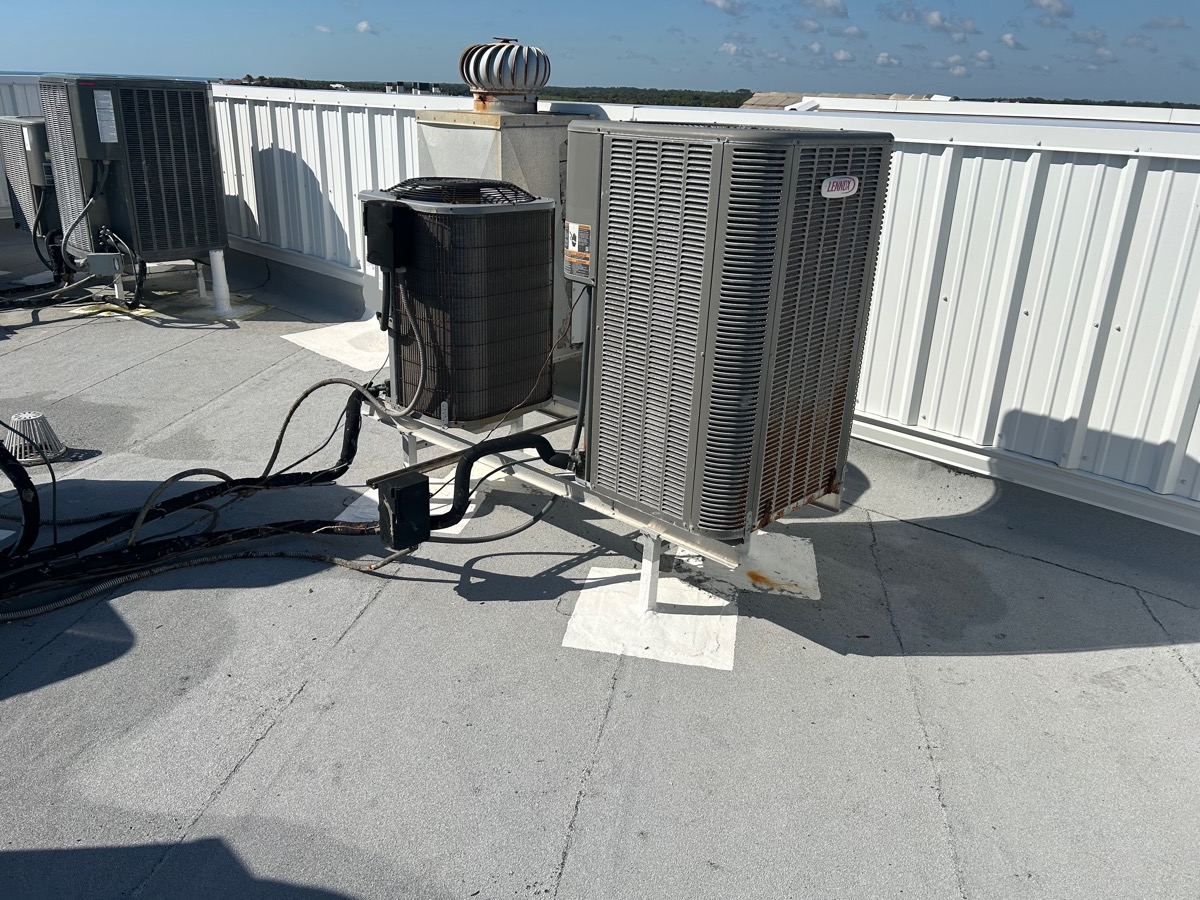
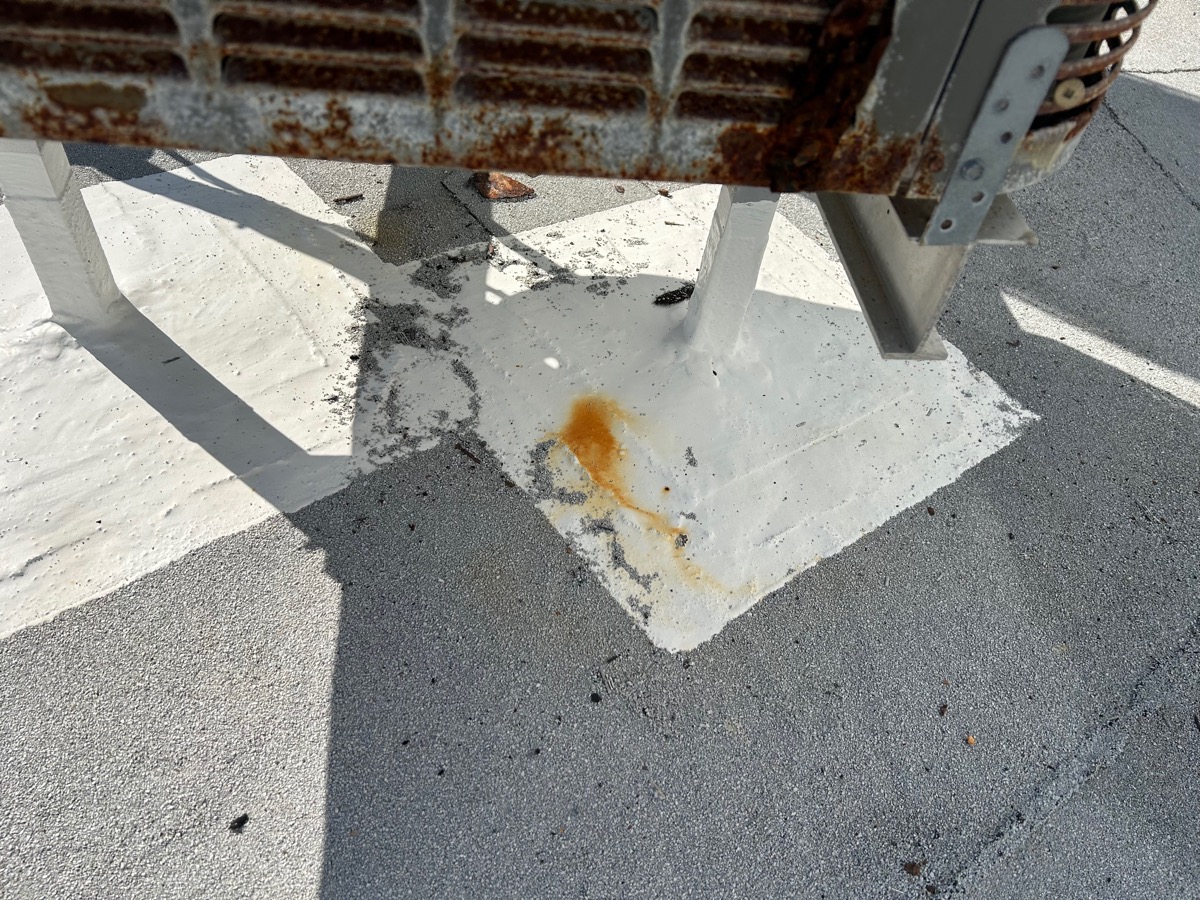
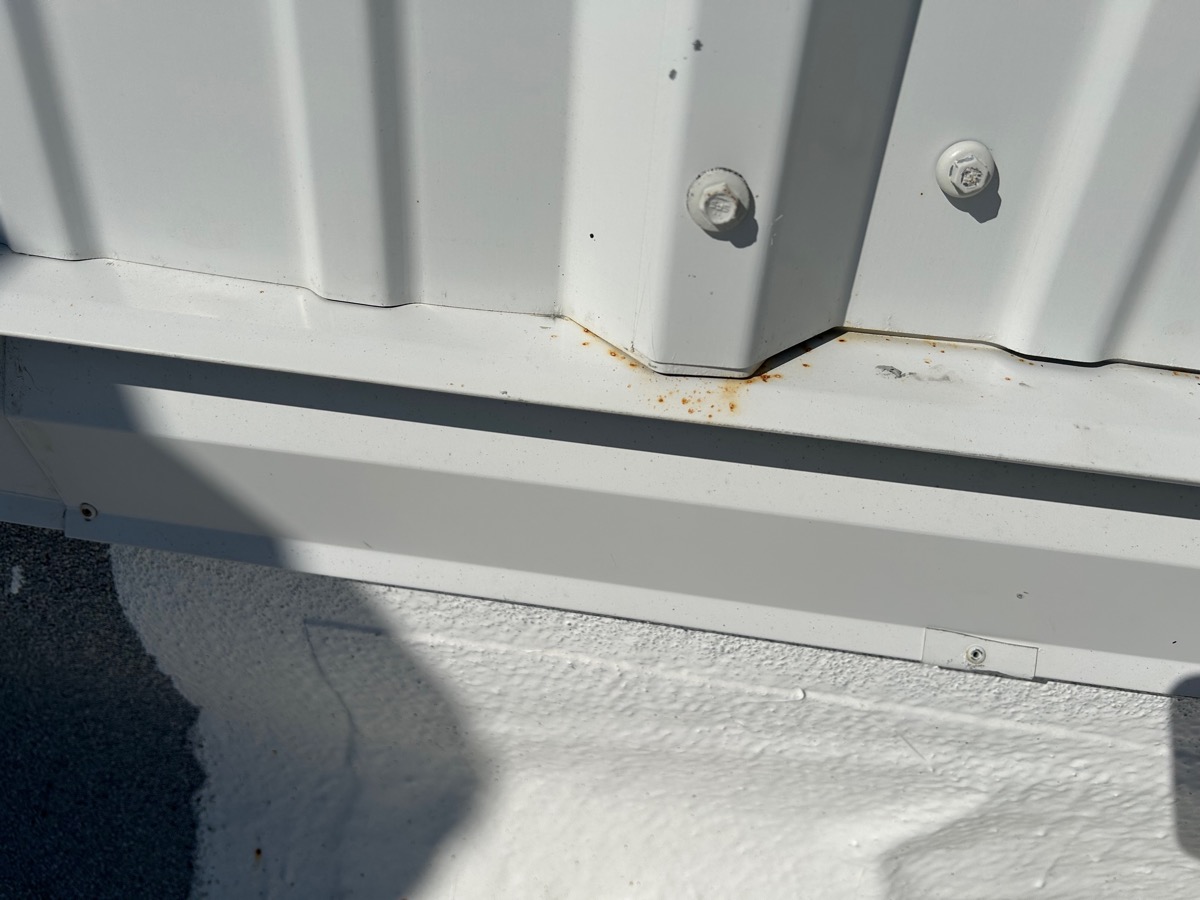
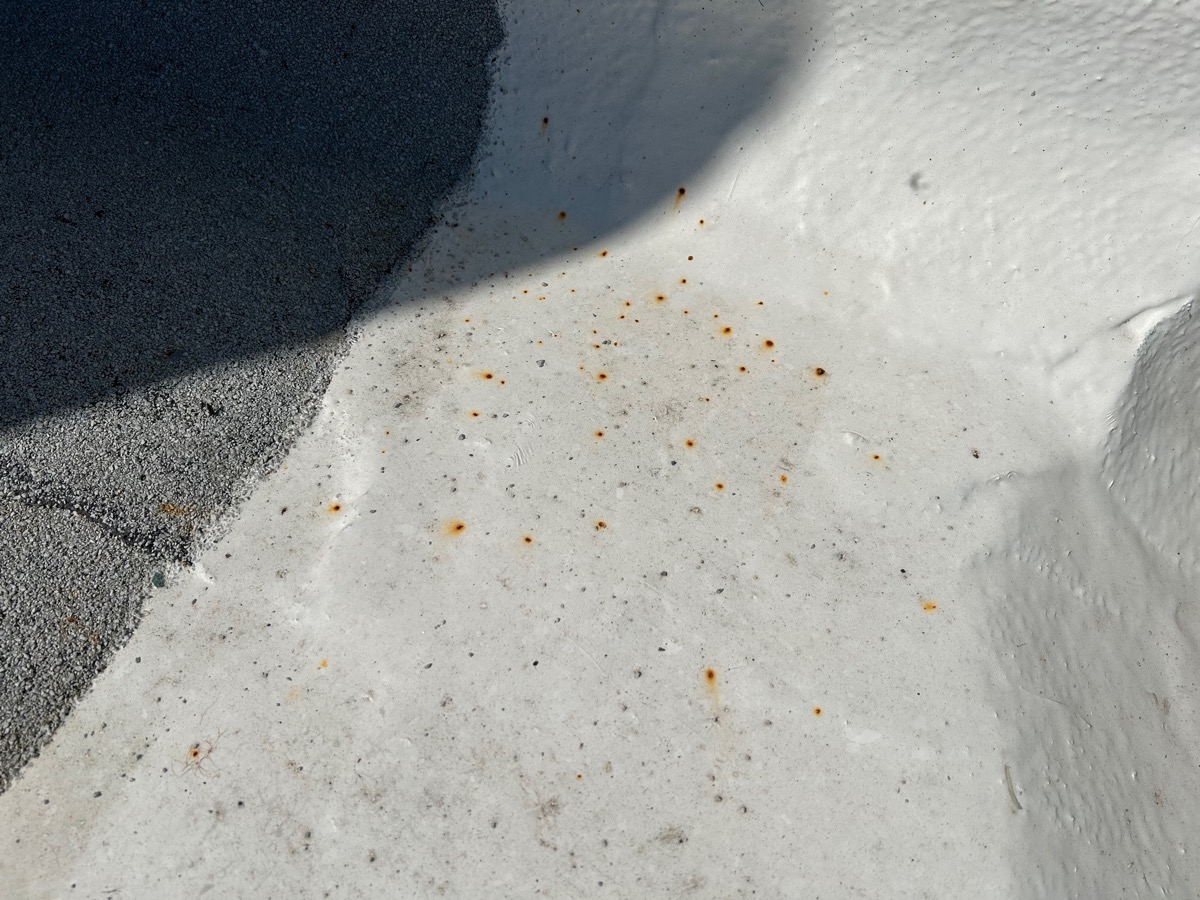
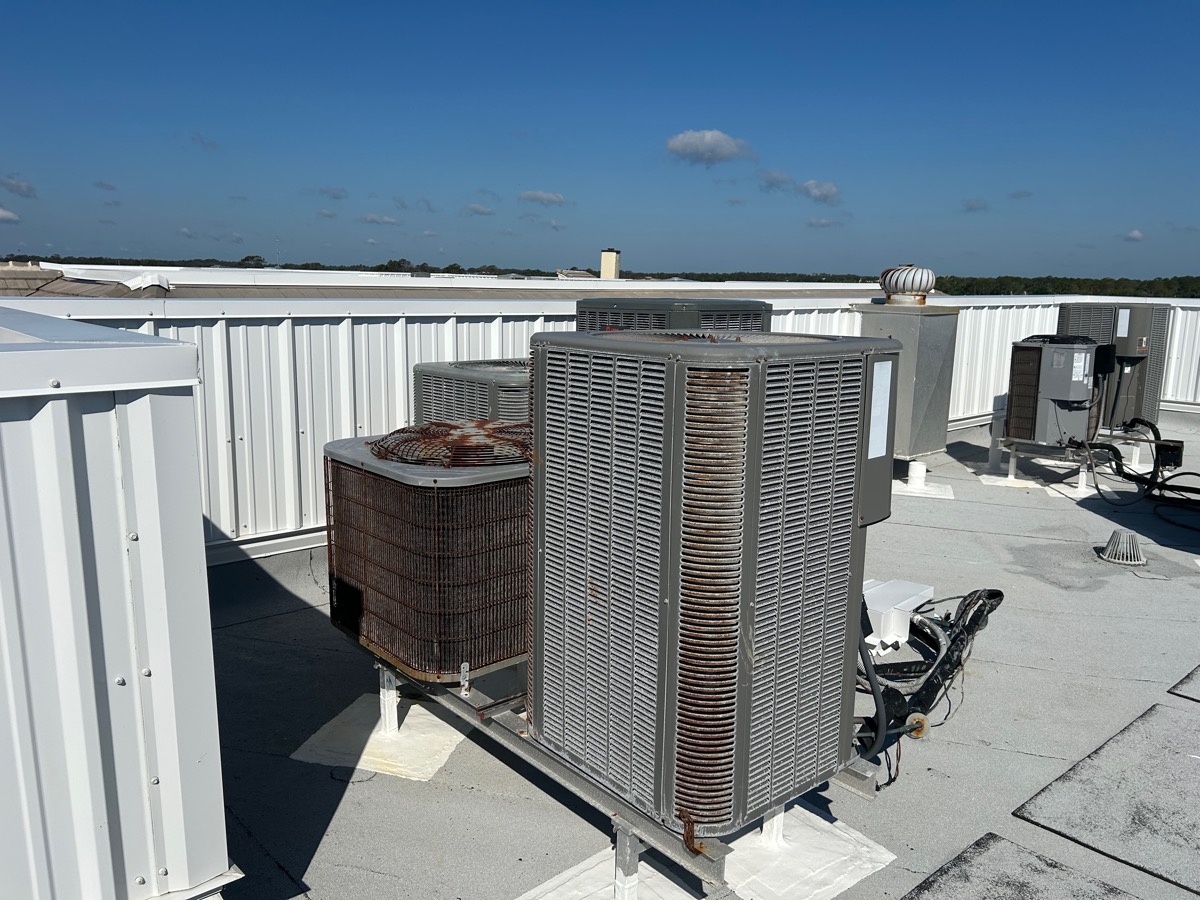
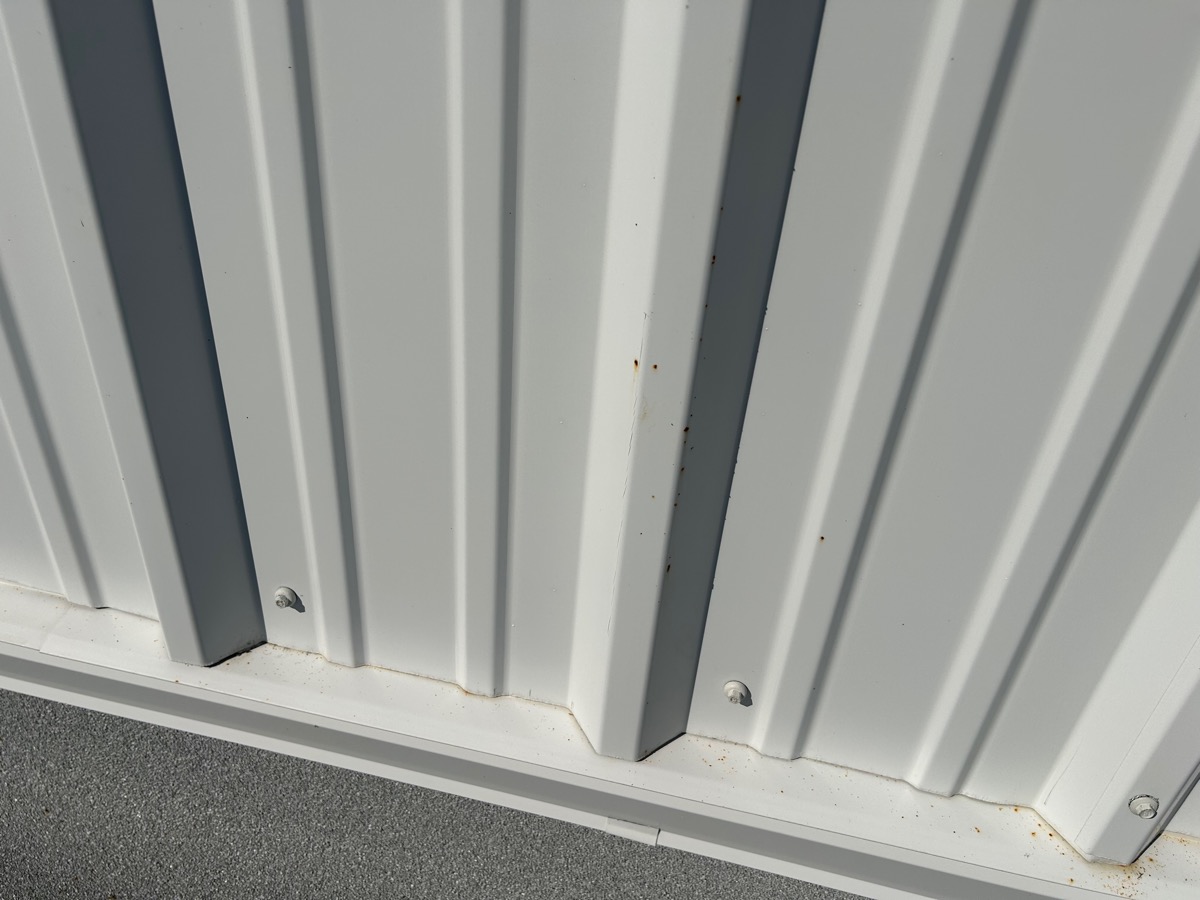
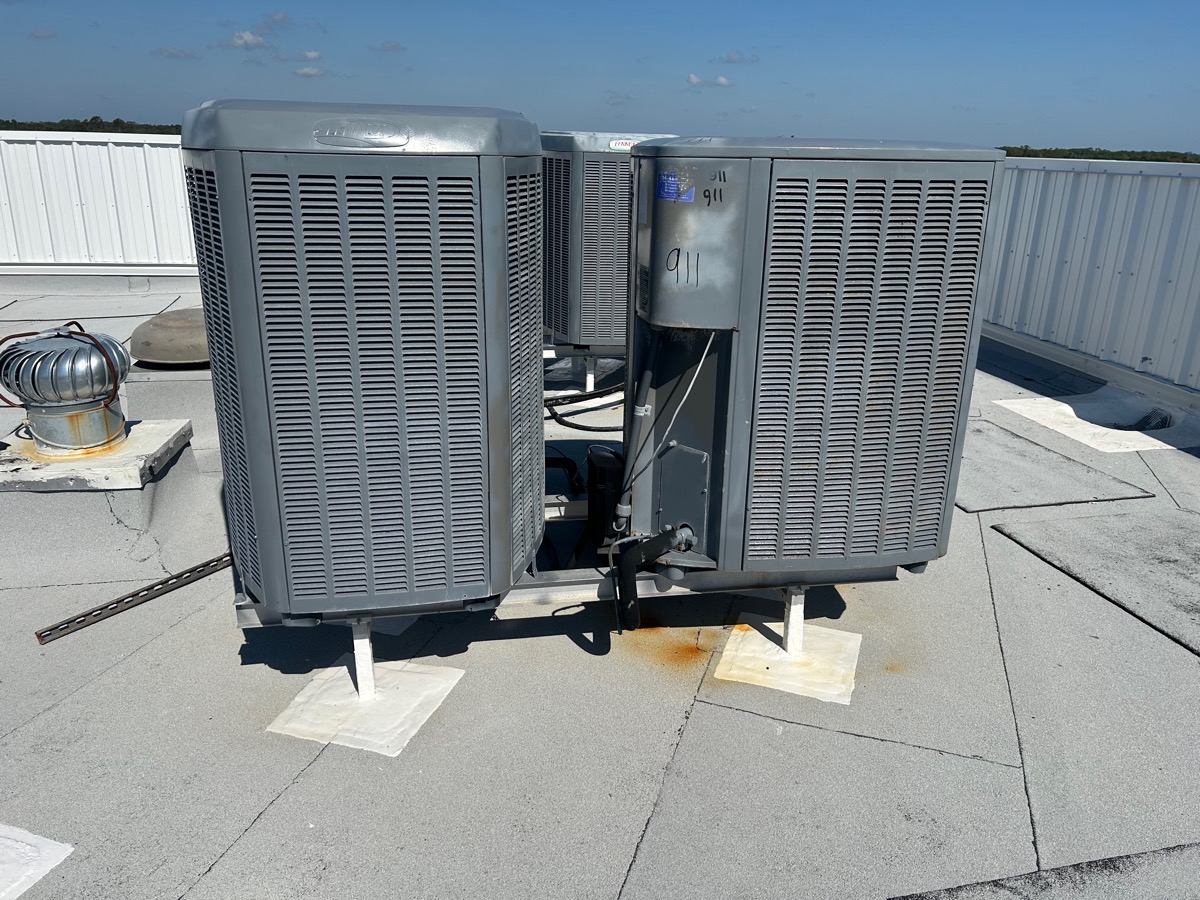
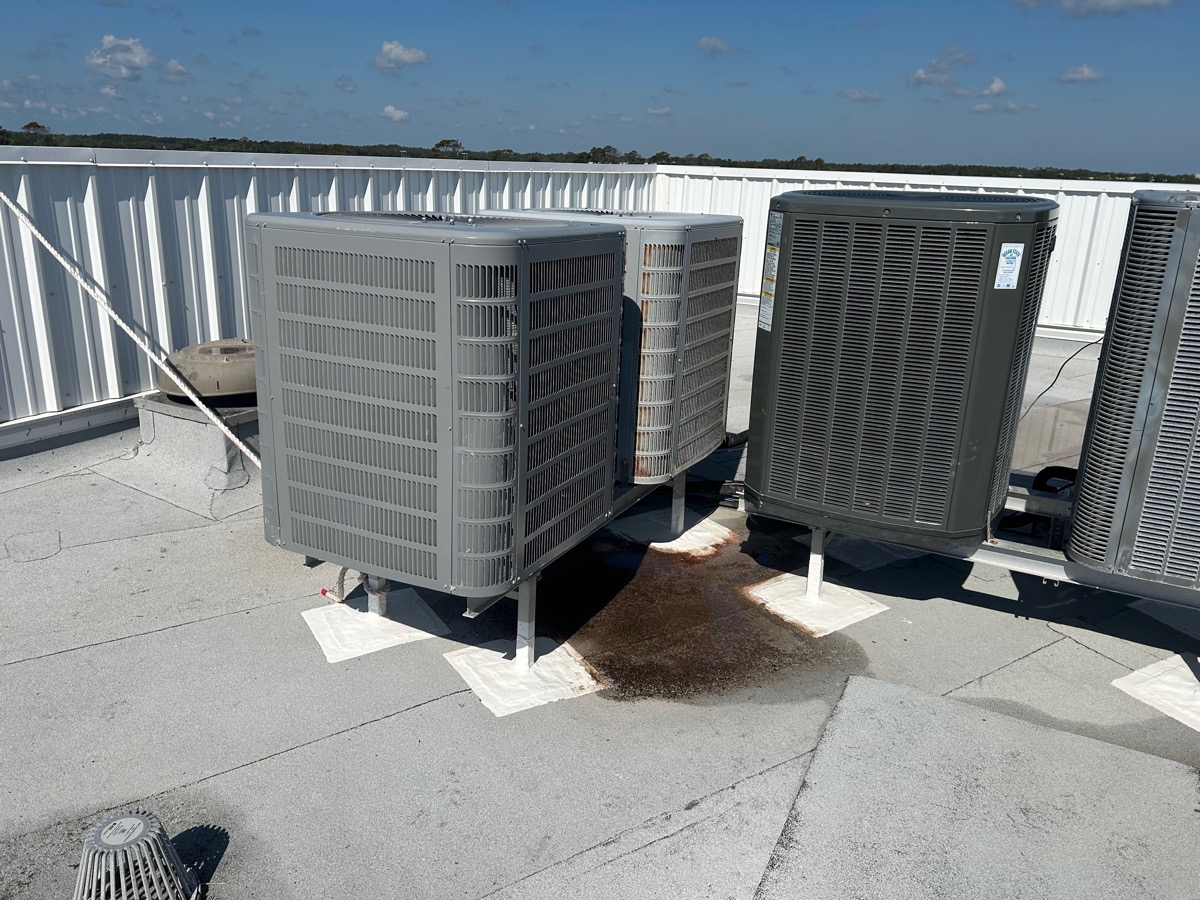
F-2 Surface rust transfer from condenser support stands onto adjacent membrane and screen-wall panels
S3 Moderate C-High Area B1-MB / B2-MB

Component: HVAC Equipment, Condenser Support Stands

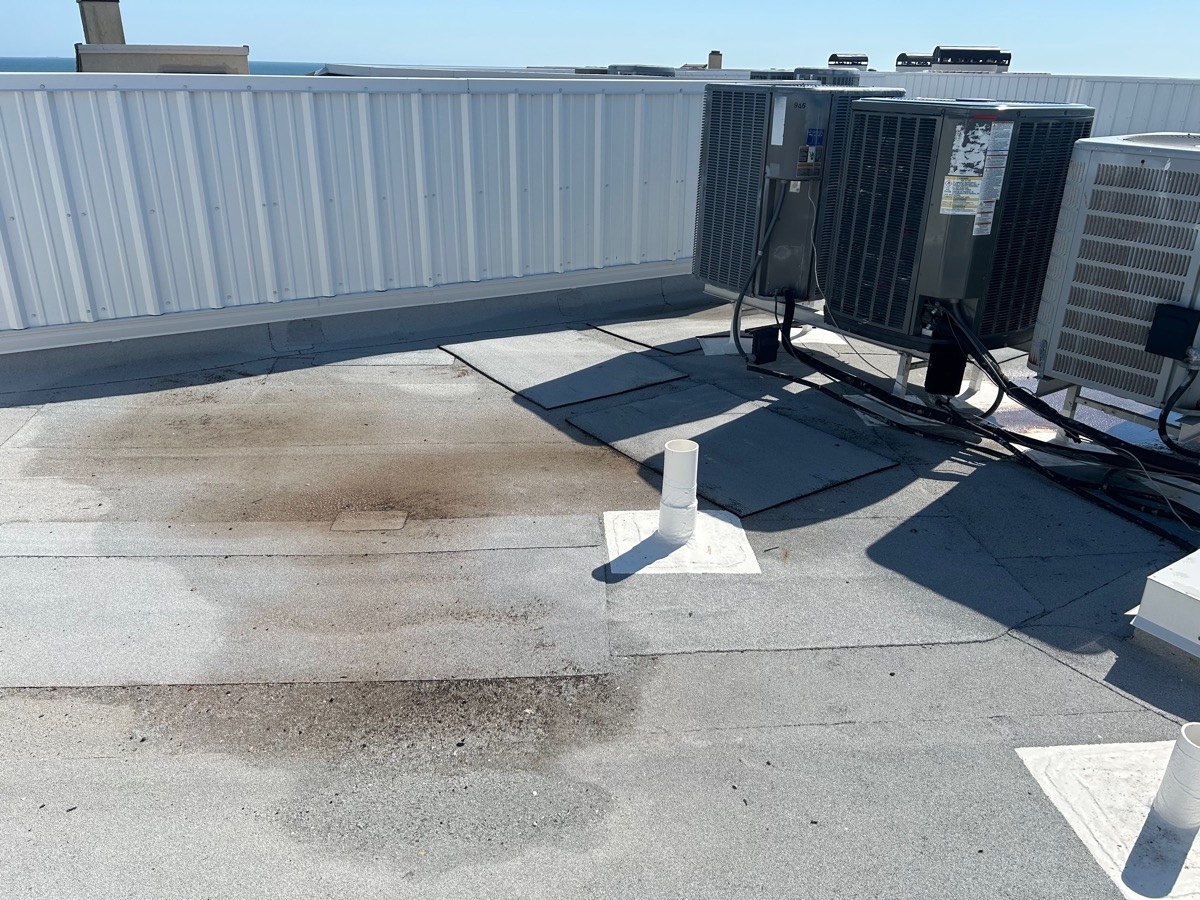
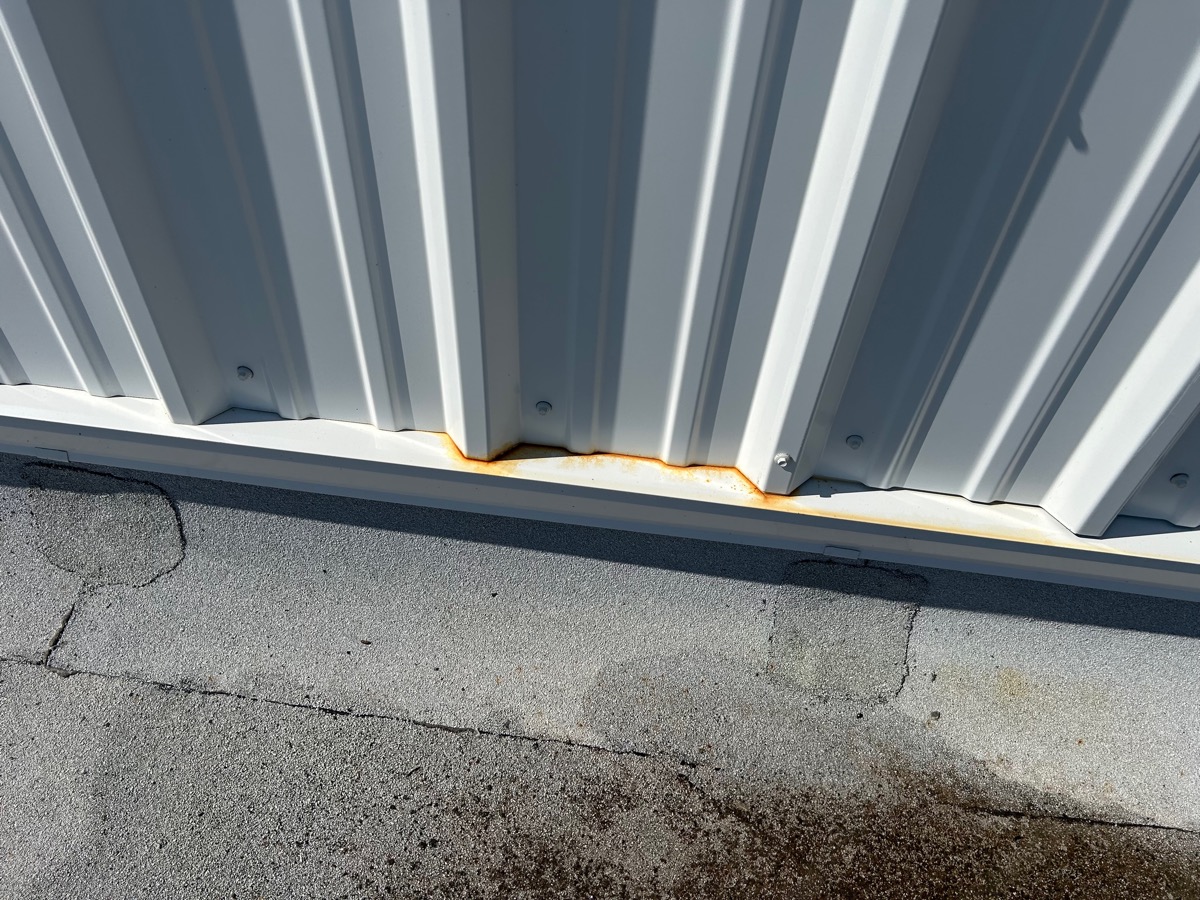
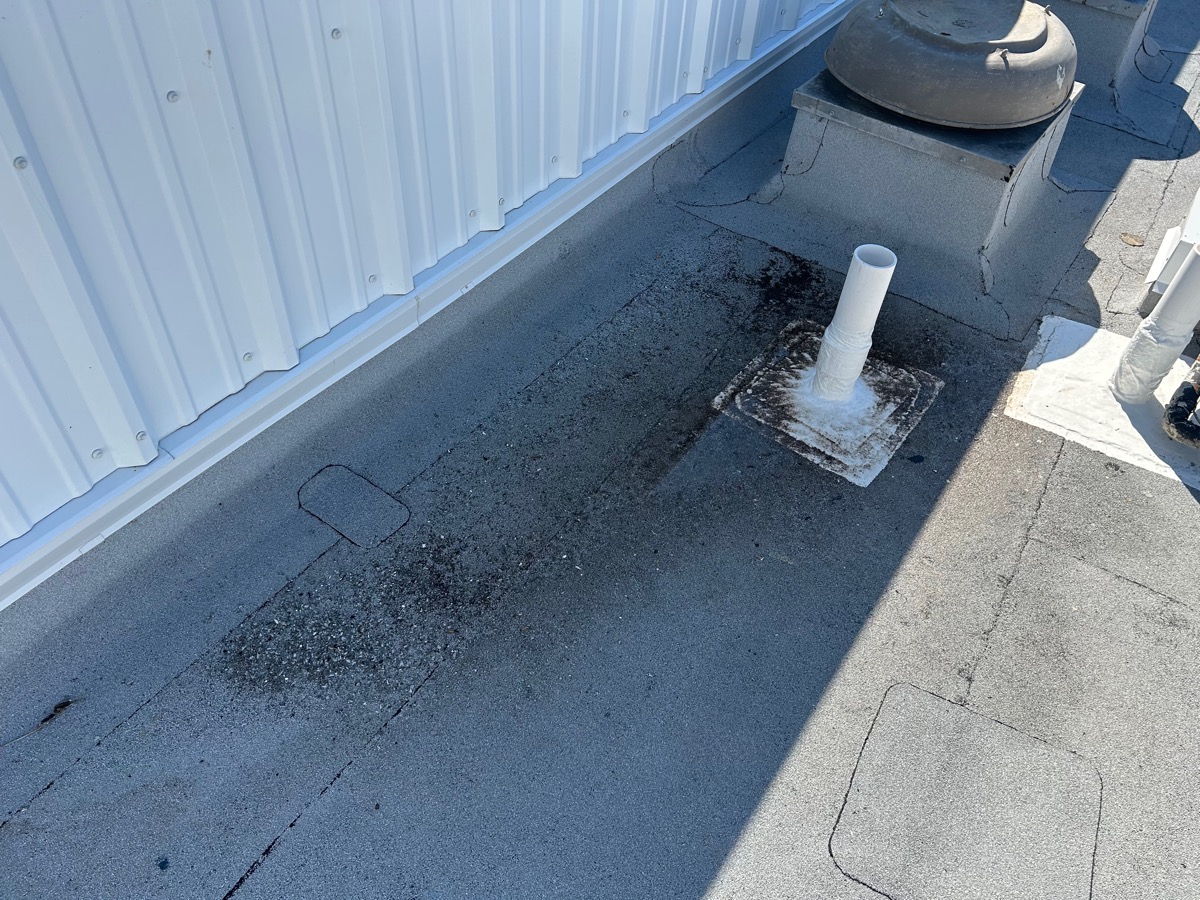
Description: Multiple HVAC condenser units are supported on ferrous angle-iron stands that are showing coastal surface corrosion. Rust runoff is depositing on the white reflective membrane surface, on the liquid flashing pads beneath each stand, and on adjacent metal screen wall panels. The membrane itself is not penetrated or compromised; the staining is cosmetic at this stage, but the upstream support stands are the active source and warrant attention before further deposition accumulates.

Likely Cause: Equipment stands were installed at coil-coated or galvanized carbon steel rather than 316 stainless. The condenser equipment and its supports predate the 2025 roof replacement scope. Coastal exposure (ISO 9223 Class C5 within 500 ft of shoreline) is accelerating coating breakdown on the ferrous components.

Recommended Action: Coordinate with the HOA and the HVAC service vendor on a plan to either (a) replace the ferrous support stands with 316 stainless steel or hot-dip-galvanized assemblies during the next condenser servicing cycle, or (b) institute a freshwater rinse cadence on the stands and adjacent membrane per coastal best practice. Concurrently, soft-wash existing rust transfer from the membrane and screen-wall panels using low-pressure water and a pH-neutral cleaner. Document cleaning for warranty record.

Action Window: 60-180 days for membrane and panel cleaning. Stand replacement coordinated with HVAC service schedule.

Reference Standard: Coastal best practice; ISO 9223 Class C5; ASTM A123 (if hot-dip galvanizing path selected).

P-003
P-004
P-008
P-009
P-012
P-013
P-041
P-055
P-059
P-060
P-062
P-066
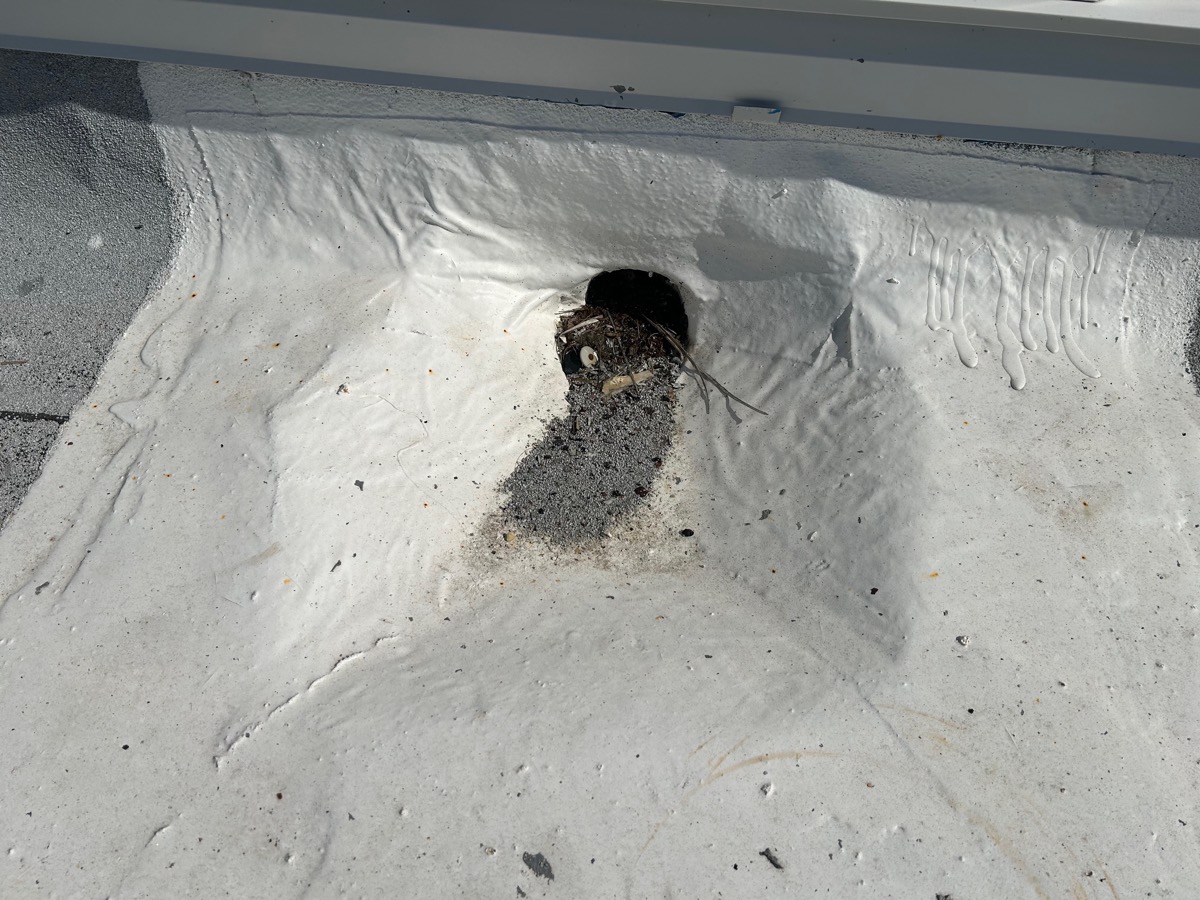
F-3 Granule and debris accumulation at drains, scuppers, and inside corners; one scupper with bird-nest debris
S3 Moderate C-High Area B1-MB / B2-MB

Component: Drainage, Drains and Scuppers

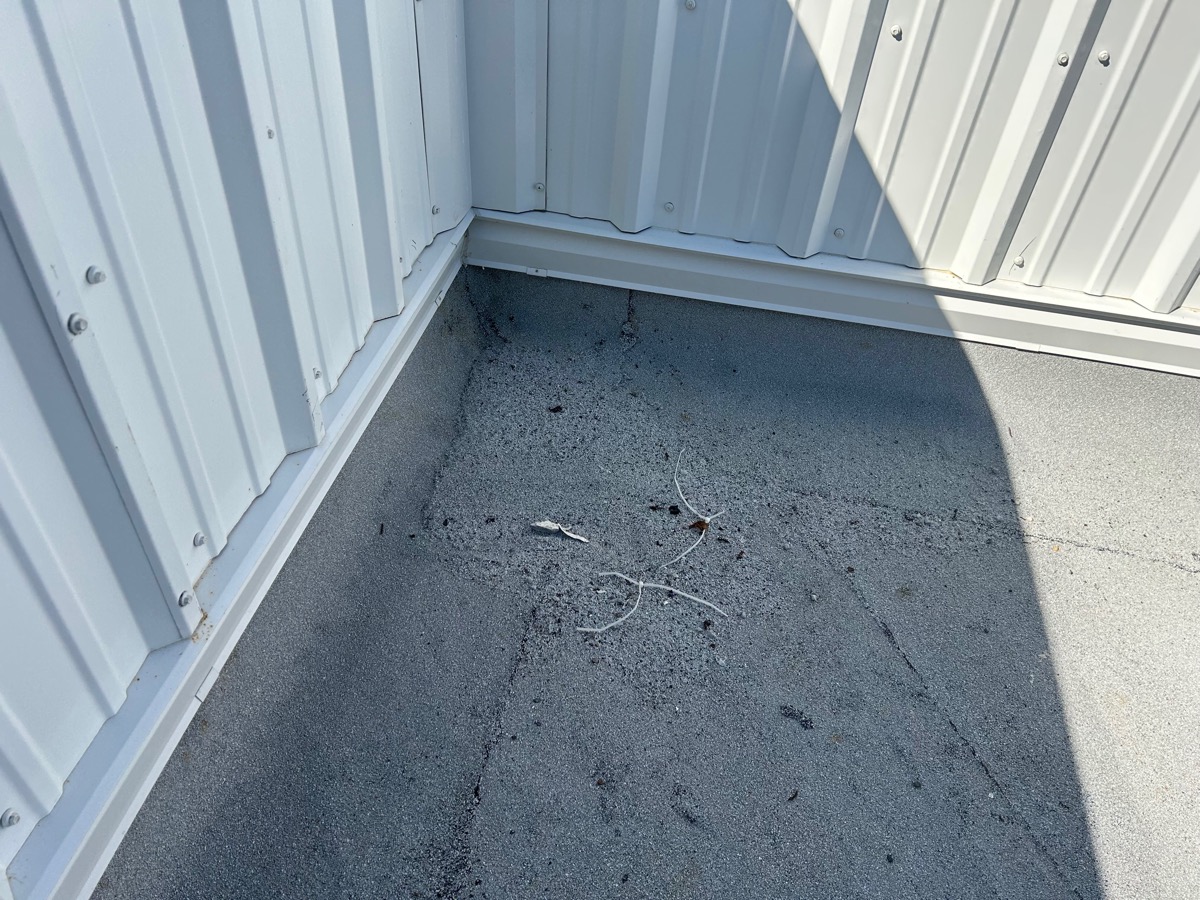
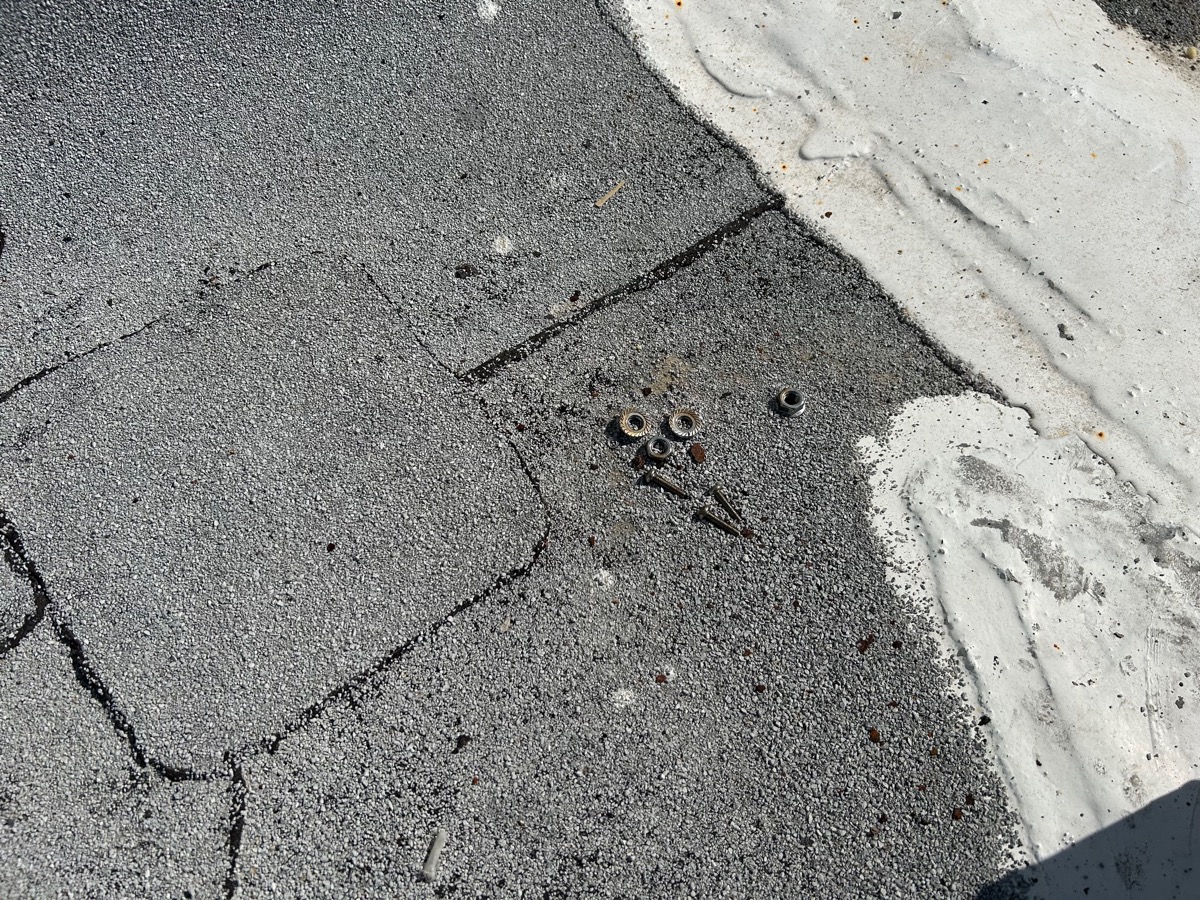
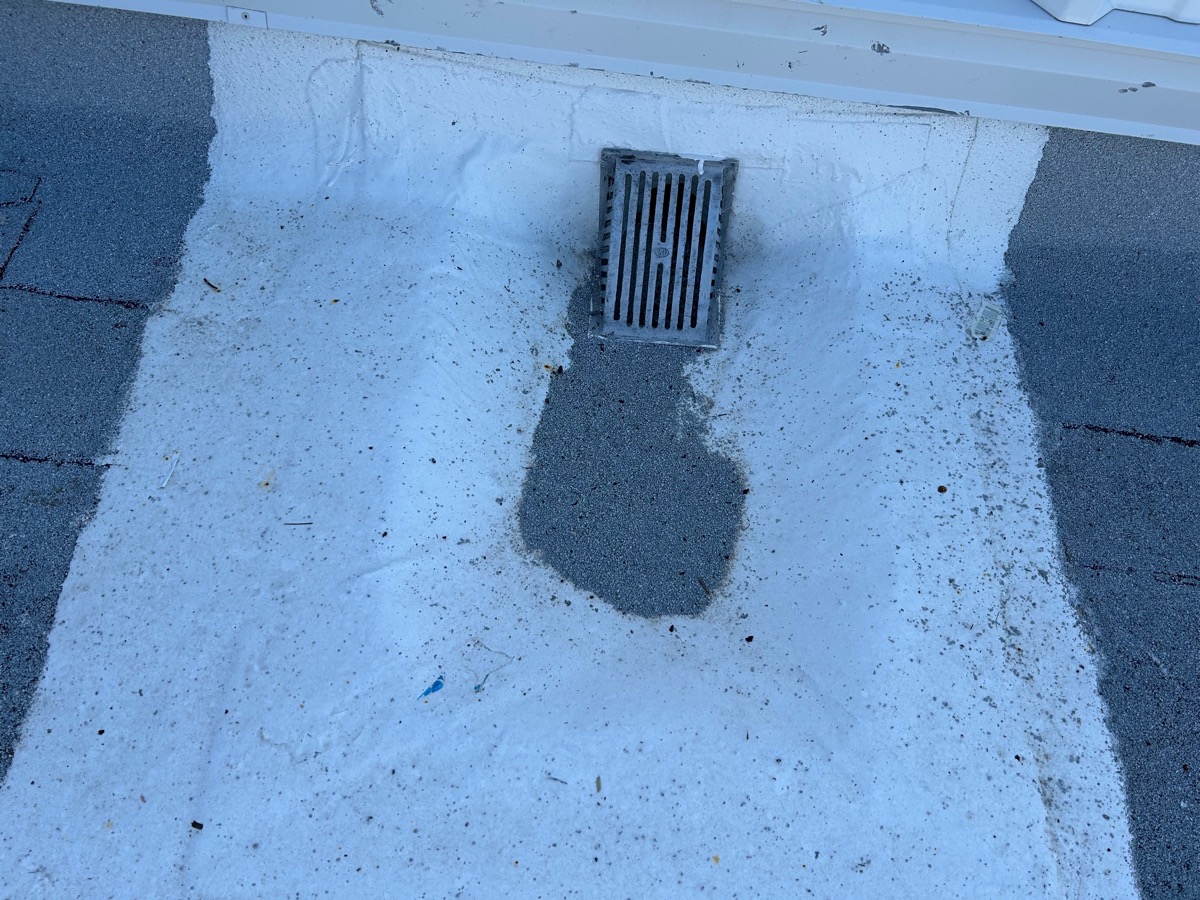
Description: Granule accumulation and minor organic debris are present at the strainer domes of several internal drains, in the throats of through-wall scuppers, and in the inside corners along the metal screen wall base. One through-wall scupper on an oceanfront-facing parapet is partially obstructed by a bird nest. Loose ferrous fasteners are present on the membrane field in one location and should be removed to prevent membrane puncture.

Likely Cause: Routine accumulation from the white granulated cap sheet, coastal sand transport, and wildlife nesting. Standard maintenance item at coastal sites.

Recommended Action: Clear all drains, scupper throats, and inside corners of accumulated granules and debris. Remove the bird nest from the obstructed scupper. Install code-compliant scupper basket strainers sized to retain debris without restricting flow. Remove loose ferrous fasteners from the membrane field. Add monthly drain-and-scupper inspection to the facilities maintenance log. Complete before the start of the 2026 Atlantic hurricane season on June 1.

Action Window: 0-30 days. Complete before June 1, 2026.

Reference Standard: FBC 2023 Section 1503.4 drainage.

P-014
P-034
P-035
P-042
P-043

Concrete Tile Mansard (Existing System)

System rating: FAIR. The existing concrete tile mansard is in the latter third of its 10 to 12 year remaining service life. The items below address active maintenance and begin capital-planning awareness for replacement.
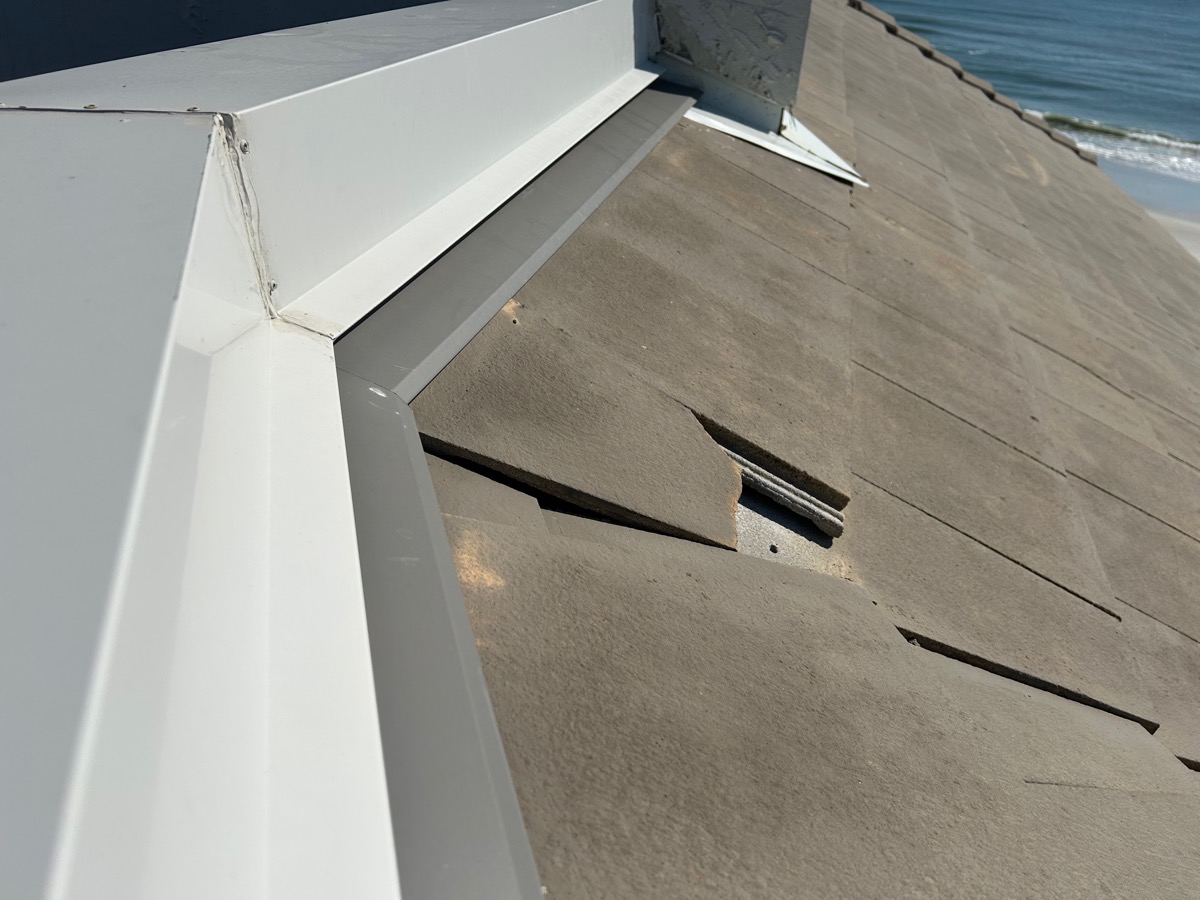
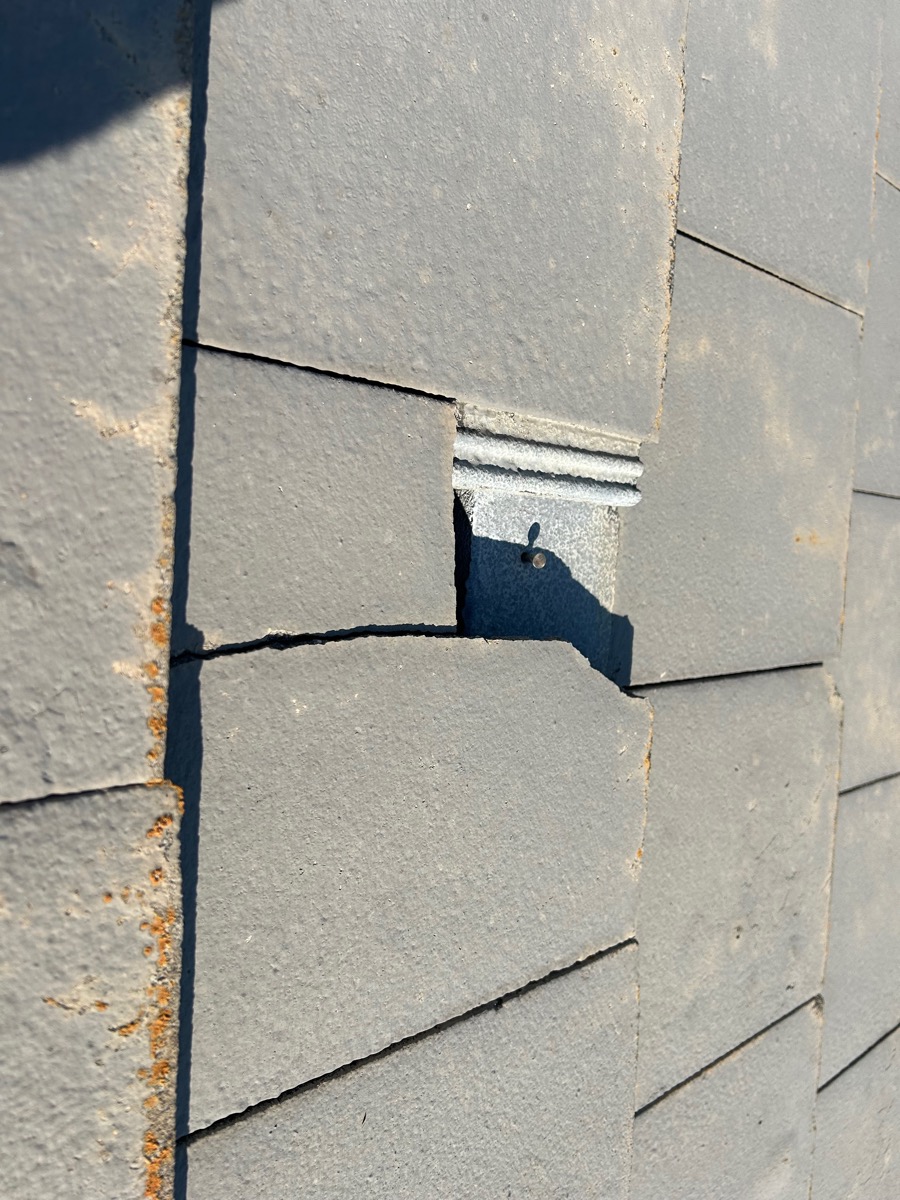
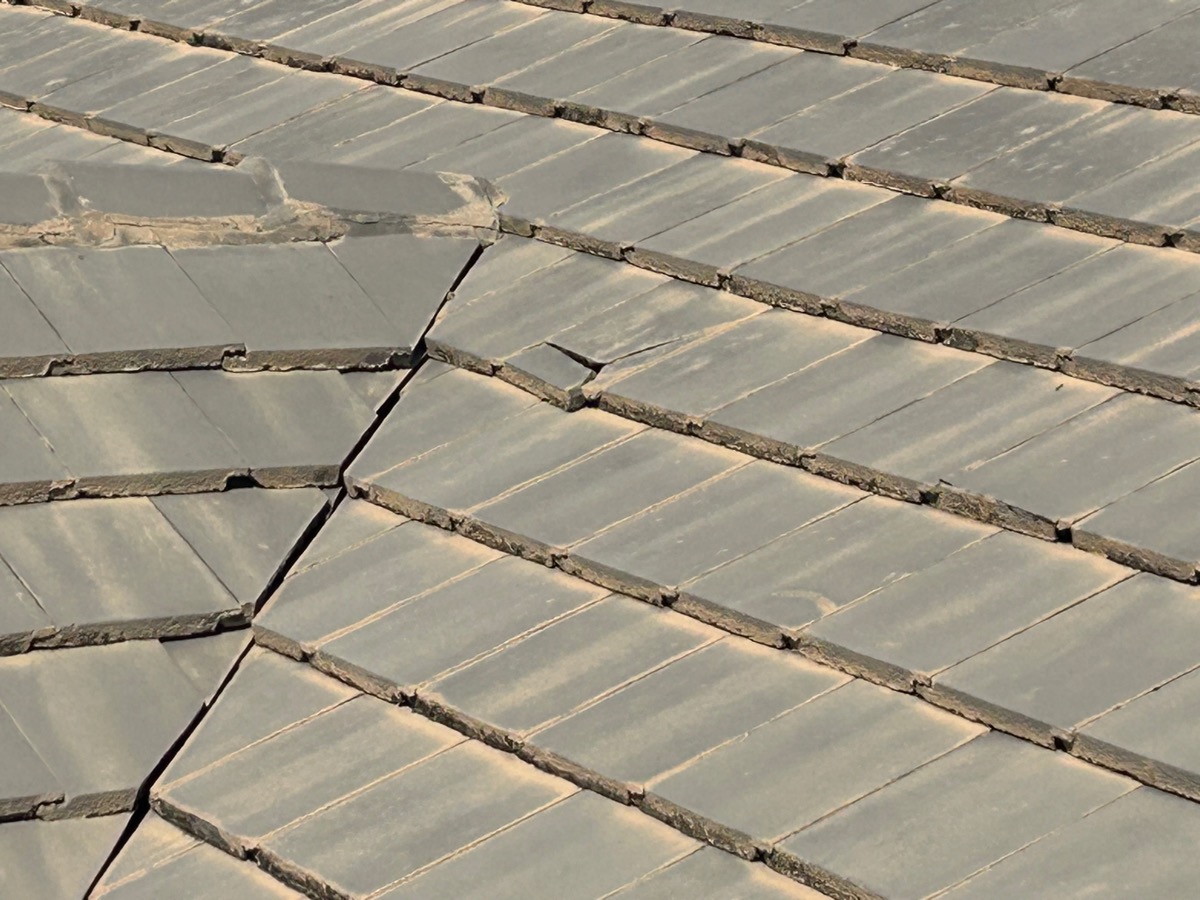
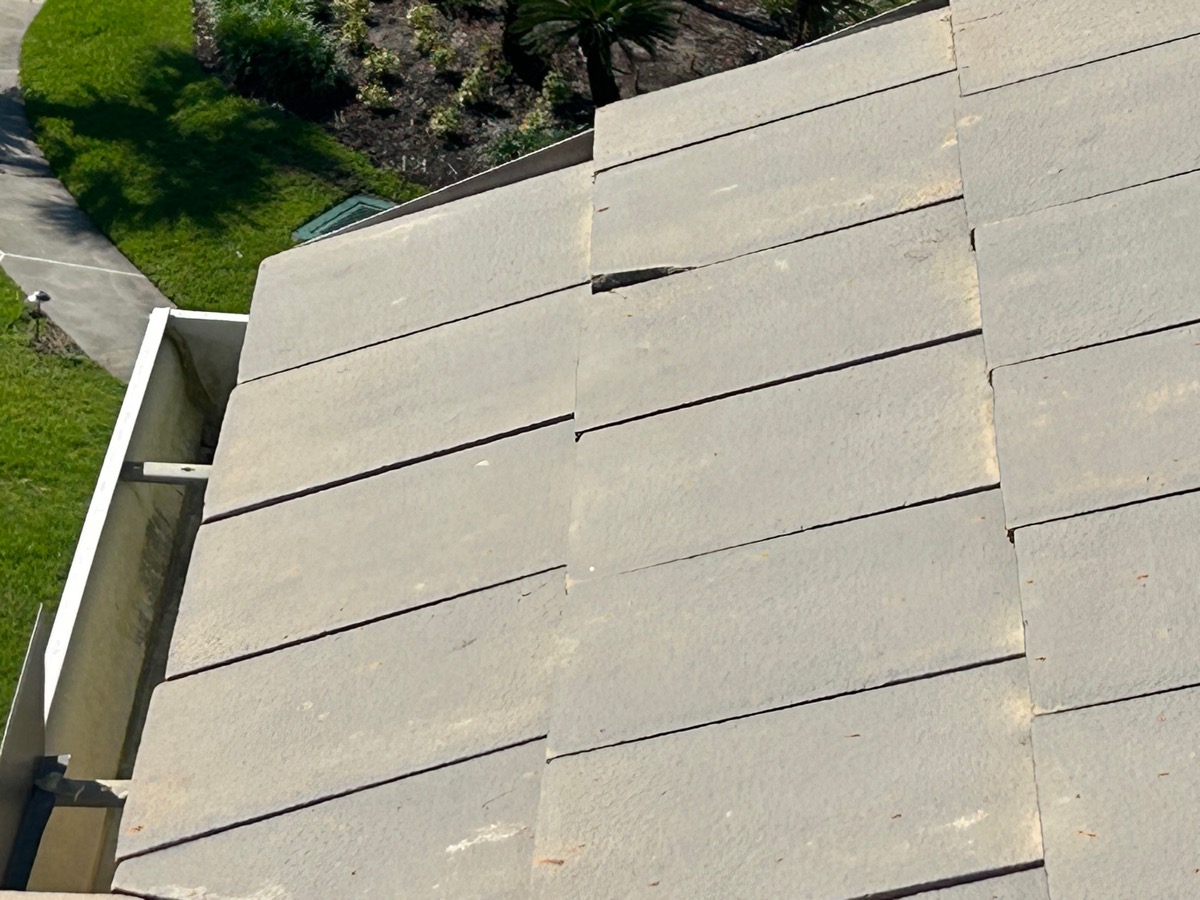
F-4 Broken concrete tile at sidewall flashing on oceanfront-facing slope
S2 Major C-High Area B1-TM / B2-TM

Component: Tile, Field at Sidewall Flashing

Description: Two adjacent concrete flat tiles are fractured at the sidewall flashing interface on an oceanfront-facing slope of the existing tile mansard. The SBS underlayment and a fastener are exposed at the fracture location. Located in ASCE 7-22 Zone 3 Exposure D, the most wind-uplift-sensitive zone on the property.

Likely Cause: Tile impact or fastener-related displacement, compounded by tile brittleness from extended UV and salt exposure on the aging mansard system.

Recommended Action: Replace damaged tiles in kind (matching available stock per F-9 below). Verify underlayment integrity beneath; if compromised, replace local section of underlayment and re-install tiles per FRSA/TRI Florida High Wind Concrete and Clay Tile Installation Manual. Use only 316 stainless or hot-dip-galvanized fasteners.

Action Window: 30-60 days. Complete before June 1, 2026 hurricane season start.

Reference Standard: FRSA/TRI Florida High Wind Concrete and Clay Tile Installation Manual; FBC 2023 Section 1518.

P-030
P-033
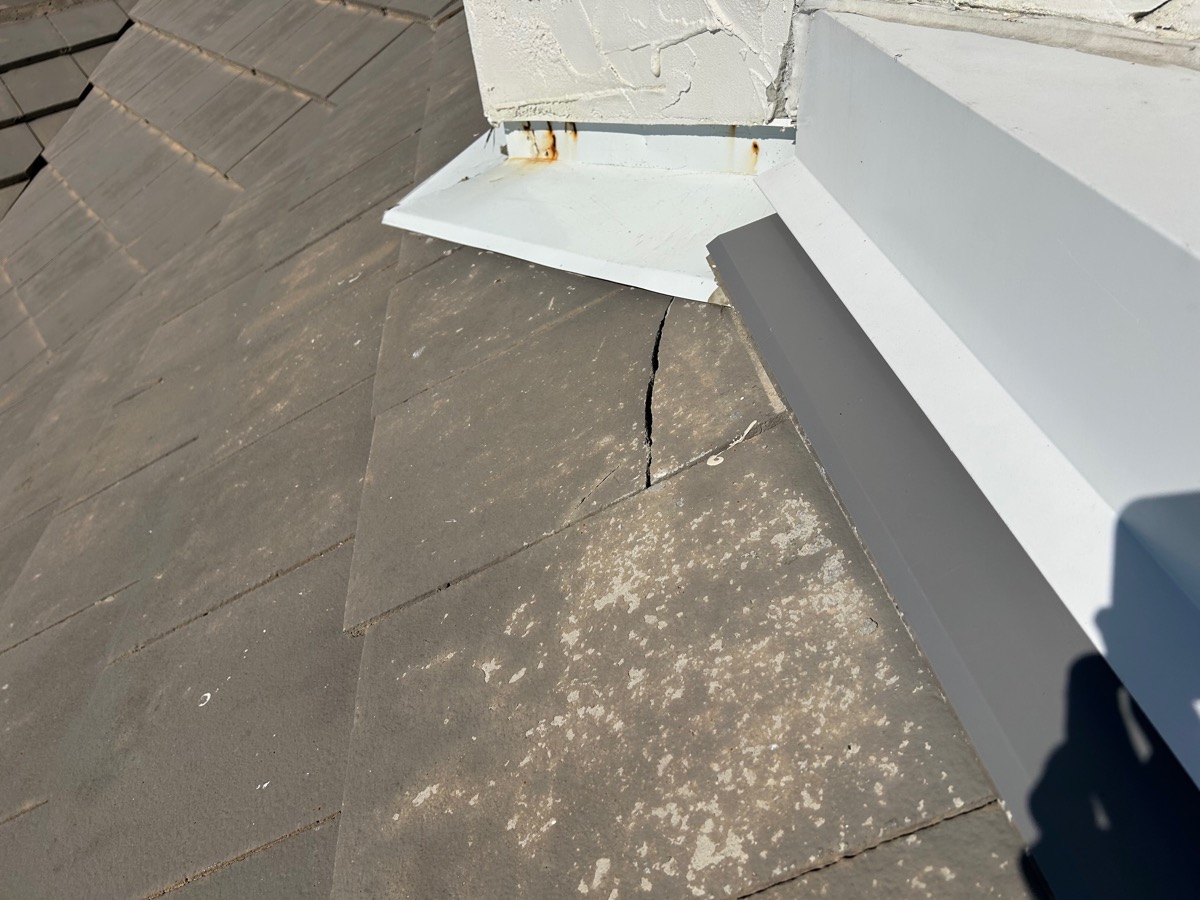
F-5 Cracked tile with rust bleed at sidewall step flashing
S2 Major C-High Area B1-TM / B2-TM

Component: Tile, Field at Step Flashing

Description: Cracked concrete tile at sidewall step flashing on an oceanfront-facing tile mansard slope, with rust bleed at the counterflashing reglet and calcium efflorescence across multiple adjacent tiles. The combination indicates moisture migration through the aging tile and mortar assembly.

Likely Cause: Cracked tile likely from impact or fastener corrosion. Efflorescence consistent with the existing tile mansard system reaching the latter third of its design service life under direct oceanfront exposure.

Recommended Action: Replace cracked tile and inspect underlayment in the immediate area. Open up the reglet termination, replace any ferrous flashing or fasteners with 316 stainless or copper, and re-bed counterflashing in fresh sealant.

Action Window: 30-90 days.

Reference Standard: FRSA/TRI Florida Manual; FBC 2023 Section 1518.

P-032
P-065
F-6 Cracked hip tile with non-compliant field mastic repair
S2 Major C-High Area B1-TM / B2-TM

Component: Tile, Hip

Description: Cracked tile at hip line of an oceanfront-facing slope, with surrounding tiles over-coated in field-applied roof cement or mastic. The repair is not a code-compliant detail and accelerates UV-driven mastic shrinkage and detachment.

Likely Cause: Prior emergency field repair using bulk mastic rather than proper tile replacement. The repair pre-dates Charles Taylor's involvement at this property.

Recommended Action: Remove field-applied mastic, replace cracked tile in kind, and re-bed hip tiles per FRSA/TRI manual using appropriate mortar bedding or factory-engineered hip-rake-and-ridge fasteners.

Action Window: 30-90 days.

Reference Standard: FRSA/TRI Florida Manual; FBC 2023 Section 1518.

P-048
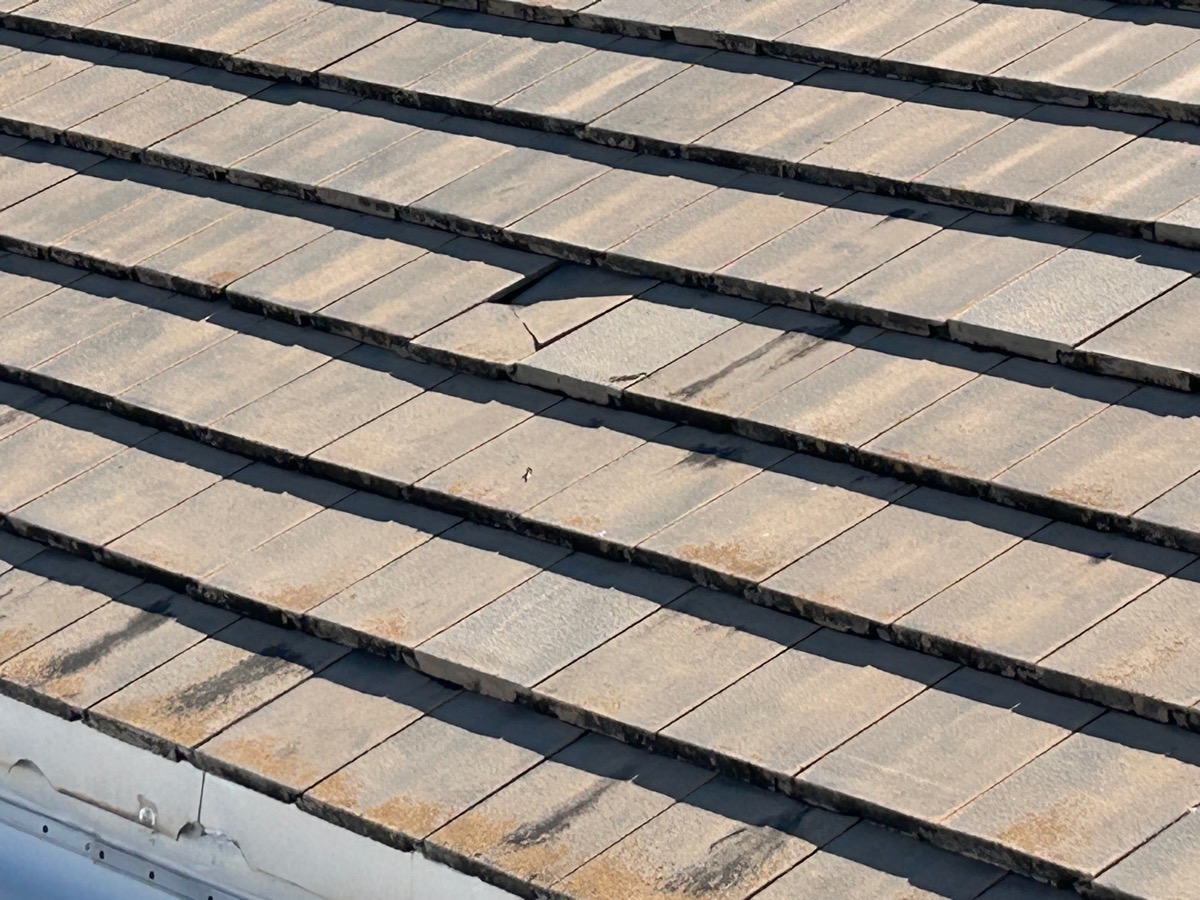
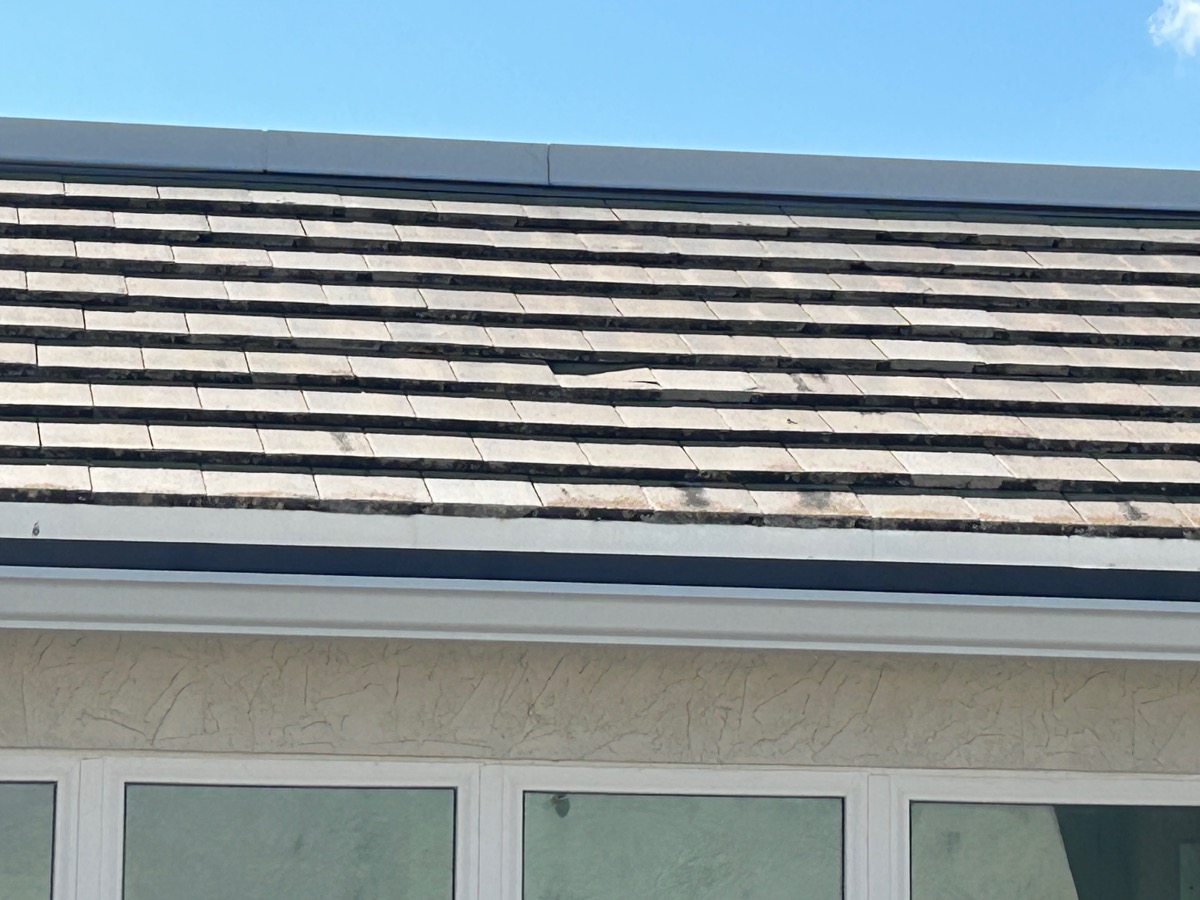
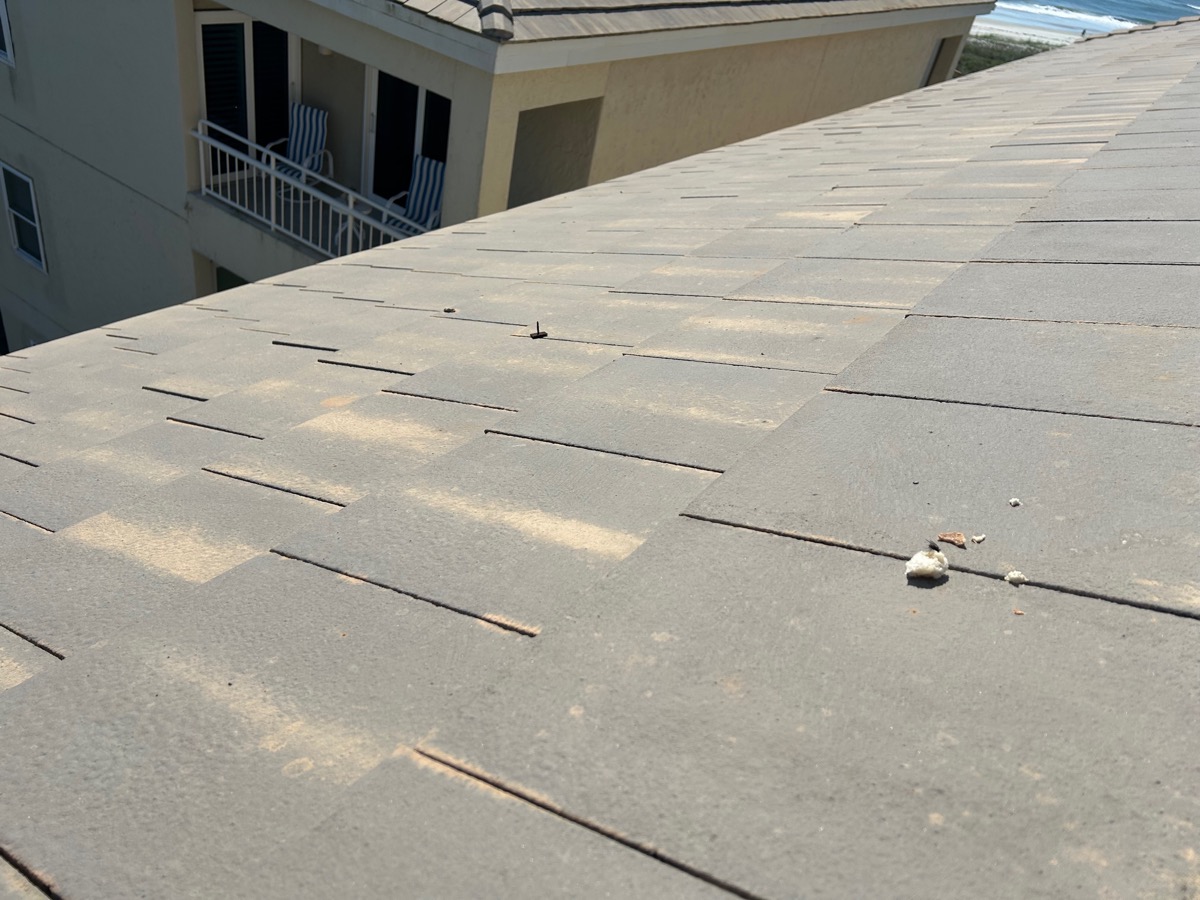
F-7 Cracked tile and exposed proud fastener on tile slope
S3 Moderate C-High Area B1-TM / B2-TM

Component: Tile, Field

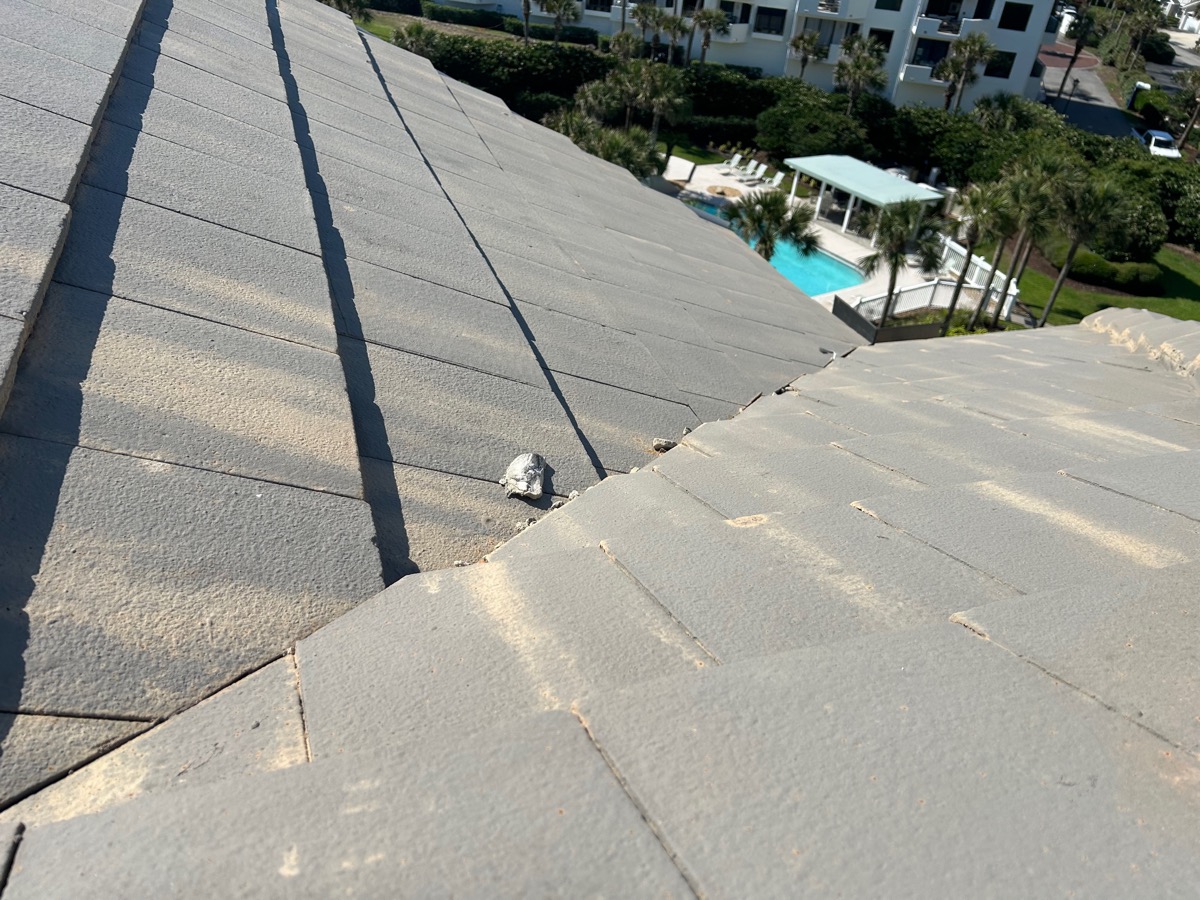
Description: Single cracked concrete tile mid-field on an oceanfront-facing slope of the existing tile mansard, plus a separate proud (un-driven or backed-out) roofing nail in the tile field. Small broken mortar fragment also visible on the tile face.

Likely Cause: Cracked tile likely from impact. Proud fastener typical of aging tile assemblies where wood batten or substrate has dried and shrunk.

Recommended Action: Replace cracked tile in kind. Drive or replace proud fastener with 316 stainless ring-shank fastener. Remove broken mortar debris.

Action Window: 60-120 days.

Reference Standard: FRSA/TRI Florida Manual.

P-037
P-044
P-046
F-8 Non-compliant field mastic repair at tile hip joint
S3 Moderate C-High Area B1-TM / B2-TM

Component: Tile, Hip and Valley

Description: Field-applied roof cement or mastic mound at a hip tile joint on an interior-facing tile mansard slope. Functional as an emergency seal but not a code-compliant detail.

Likely Cause: Prior emergency repair using bulk mastic. Tile not replaced. The repair pre-dates Charles Taylor's involvement at this property.

Recommended Action: Remove mastic, replace damaged tile, and re-bed hip per FRSA/TRI manual.

Action Window: 60-120 days.

Reference Standard: FRSA/TRI Florida Manual.

P-047
F-9 Mismatched replacement tiles in valley indicating end-of-supply-line condition
S3 Moderate C-High Area B1-TM / B2-TM

Component: Tile, Replacement Inventory

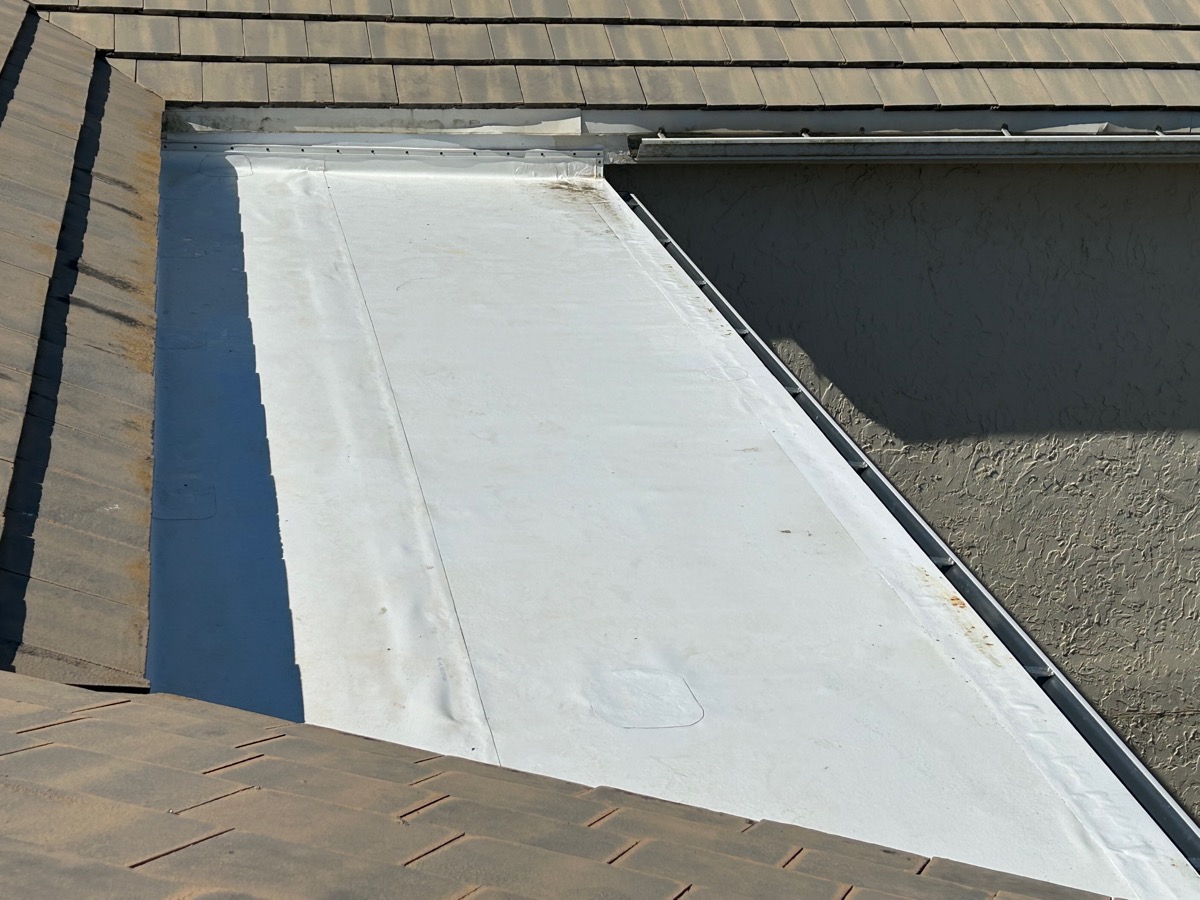
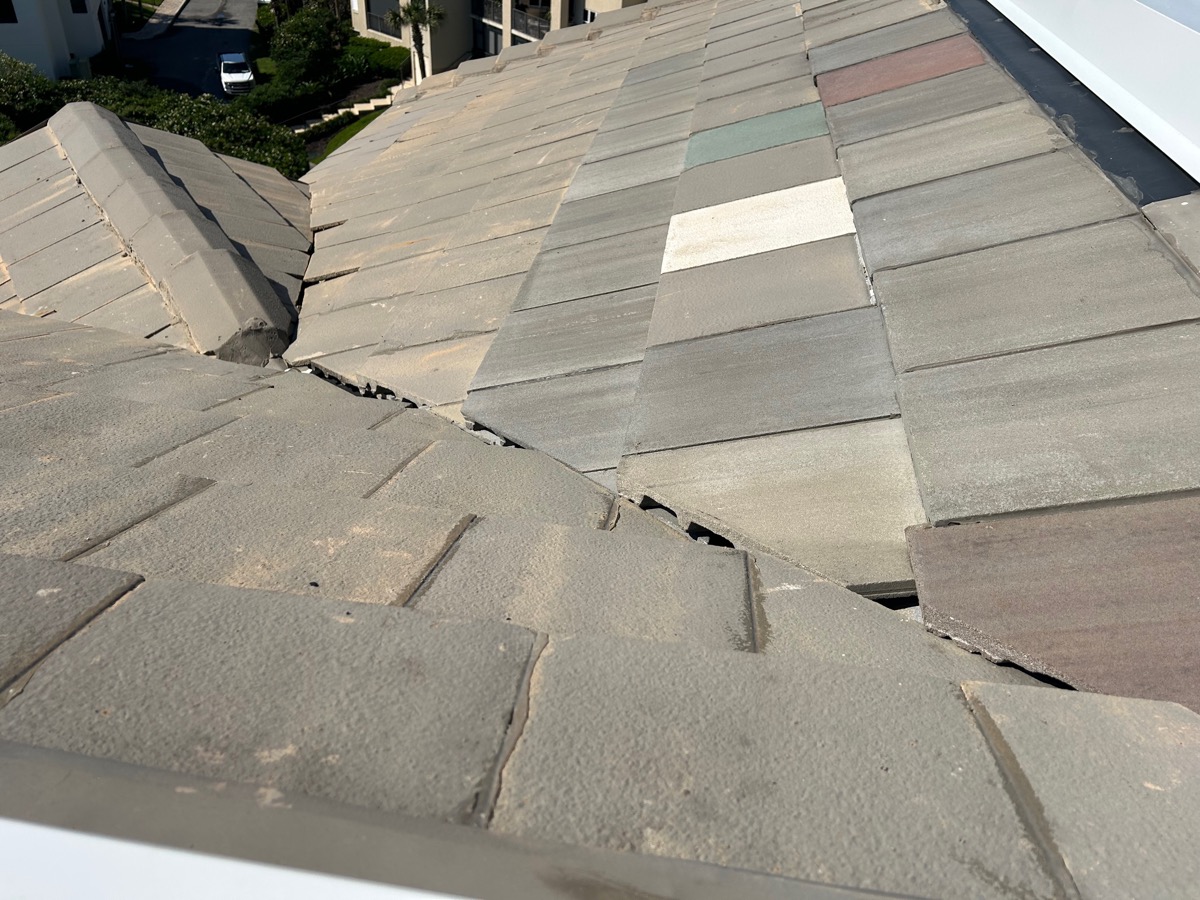
Description: Tile valley on the existing tile mansard shows multiple recent replacement tiles in non-matching colors (pink, green, white, gray). The condition reflects prior owner repair history using salvaged or substitute tiles because the original tile model and color line are no longer in production.

Likely Cause: Tile manufacturer or color line discontinued. With 10-12 years of remaining service life on the existing tile mansard, future repair tiles will become progressively more difficult to source.

Recommended Action: Cosmetic at present. Begin sourcing salvaged matching tile from architectural-salvage suppliers and stocking on site for future repair. As the existing tile mansard approaches the end of its 10-12 year remaining service life, begin capital planning for full tile replacement.

Action Window: Capital planning over 10-12 year horizon. Salvage sourcing within 12 months.

Reference Standard: FRSA/TRI Florida Manual.

P-052

Owner-Controlled Components

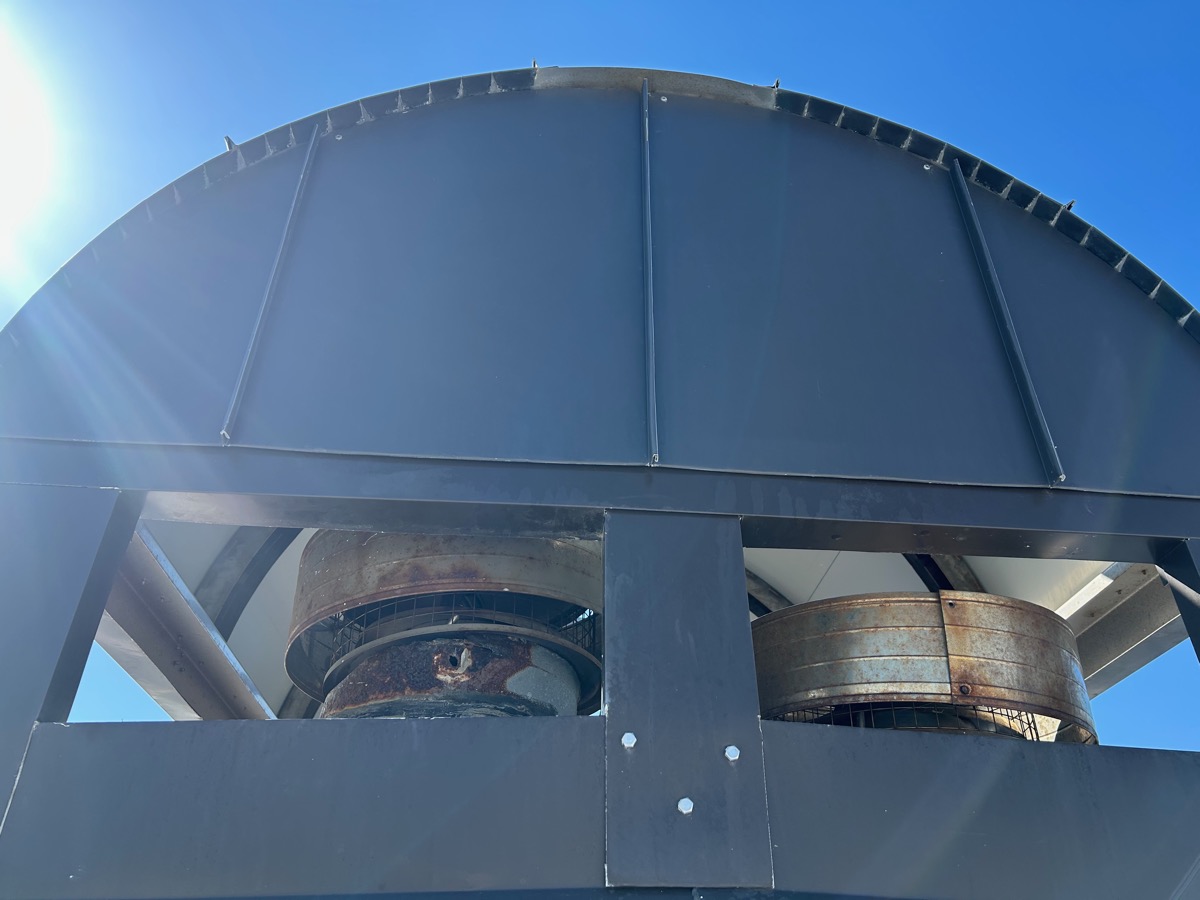
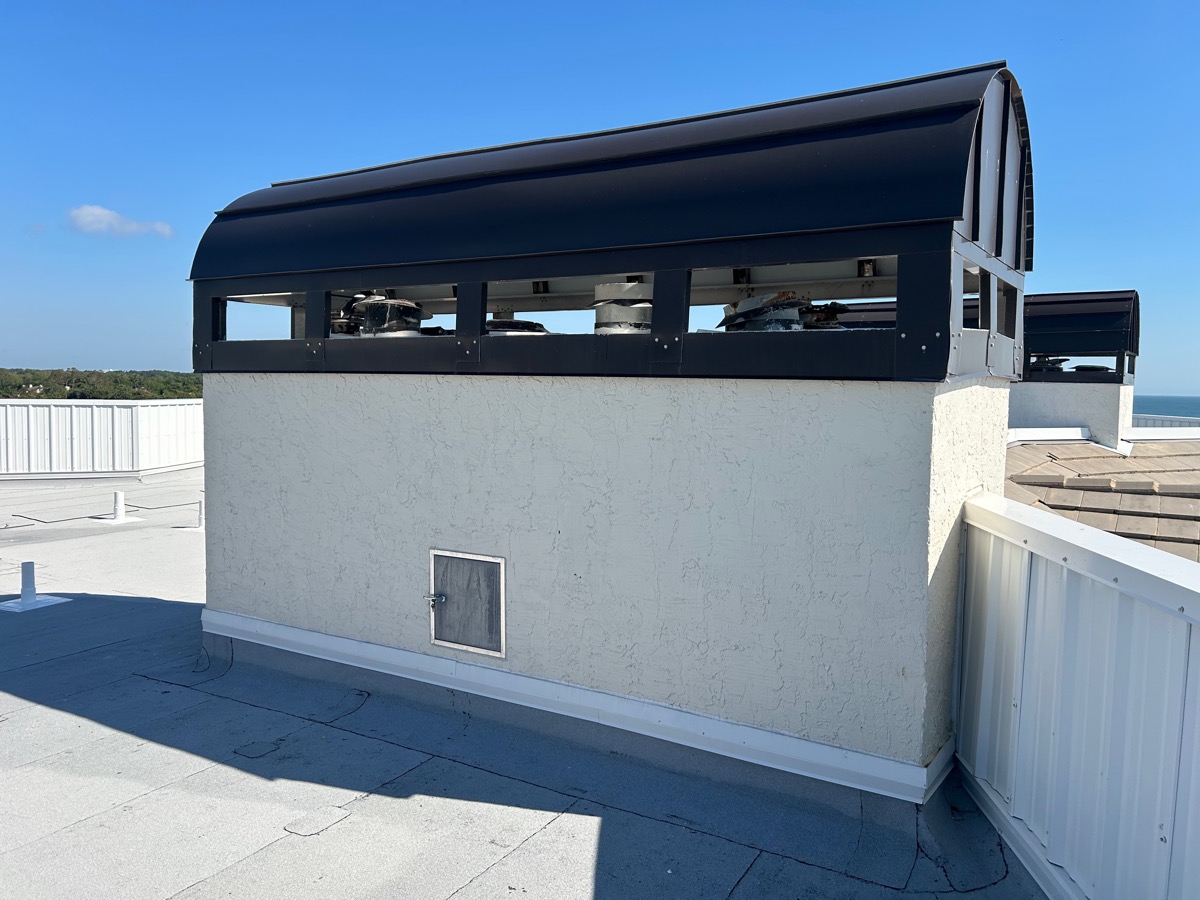
Owner-Controlled Item: Chimney Spark Arrestor Condition (Area B1-CH)

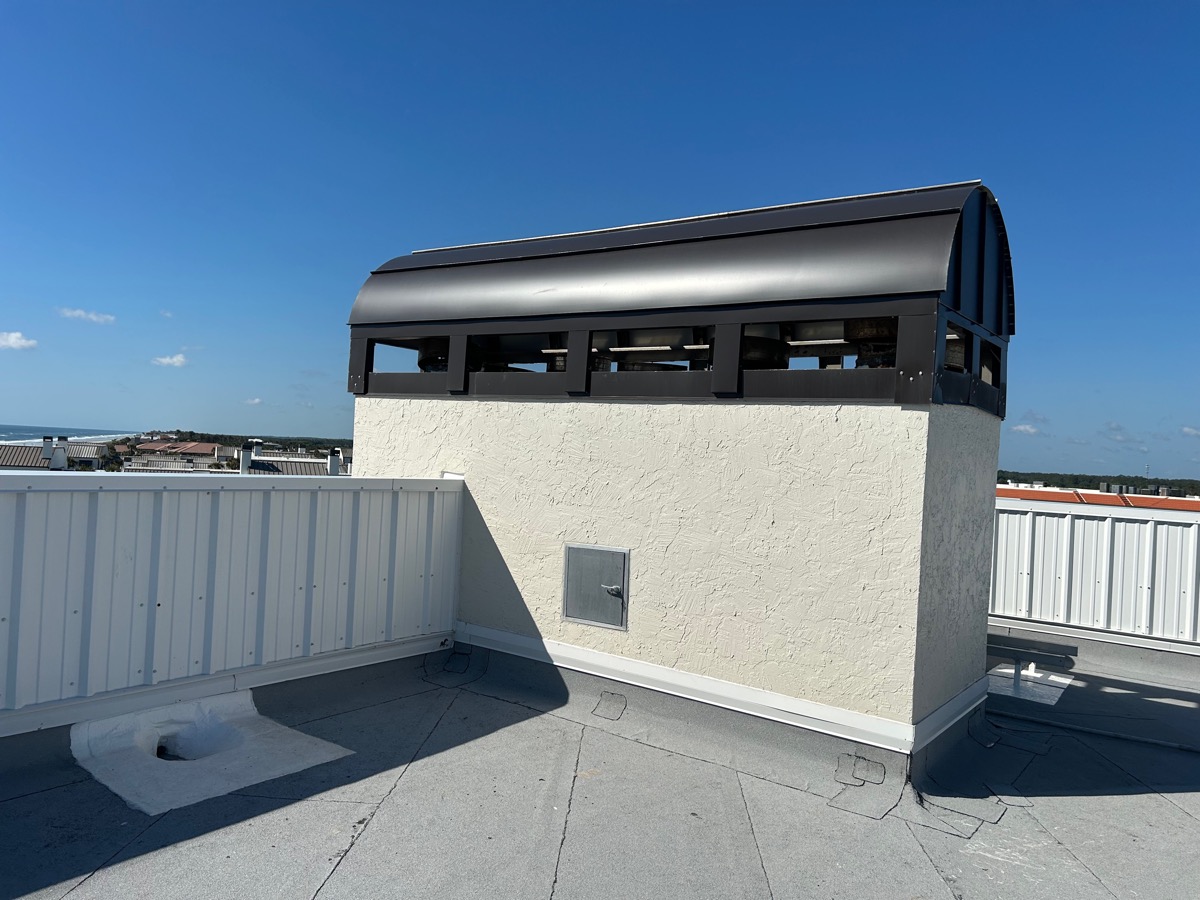
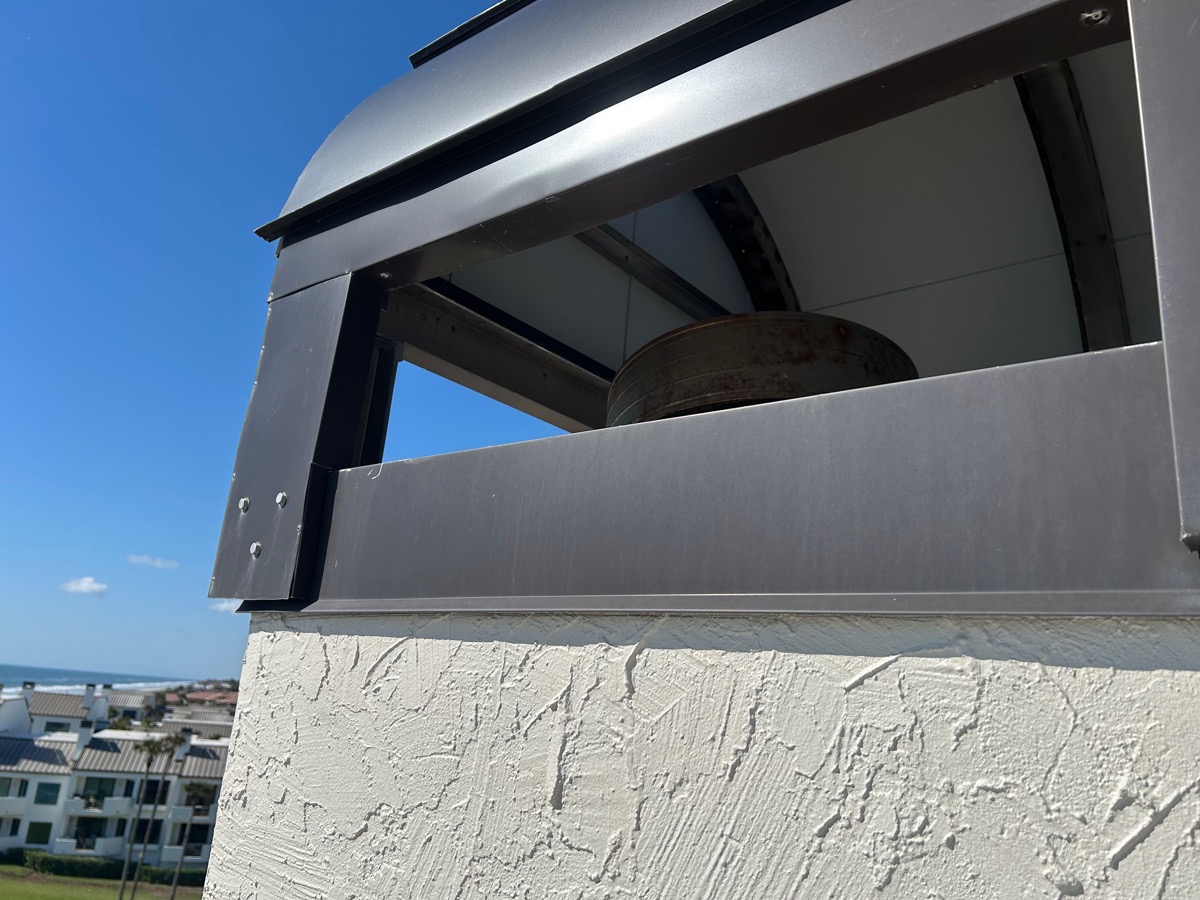
Inspection of the Building 1 chimney chase enclosures (Area B1-CH) documented severe corrosion of the ferrous chimney spark arrestors located above the chimney flues within the new aluminum chimney caps installed under the 2025 reroof scope (per drawing A701). These spark arrestors are unit-owner-controlled components and are not common-element property of the Association. Because they are not common-element, they could not be replaced as part of the 2025 common-element roof replacement scope. Building 2 does not have chimneys.

The Association should formally notify the affected Building 1 unit owners of the spark arrestor condition so that owners may arrange replacement with their own chimney-sweep or fireplace-service contractor. Recommended replacement specification is 316 stainless steel spark arrestor with appropriate bird and animal screen, sized to the existing flue diameter and code-compliant per NFPA 211. Replacement is recommended before the next heating-season use of the fireplaces.

P-019
P-020
P-022
P-027